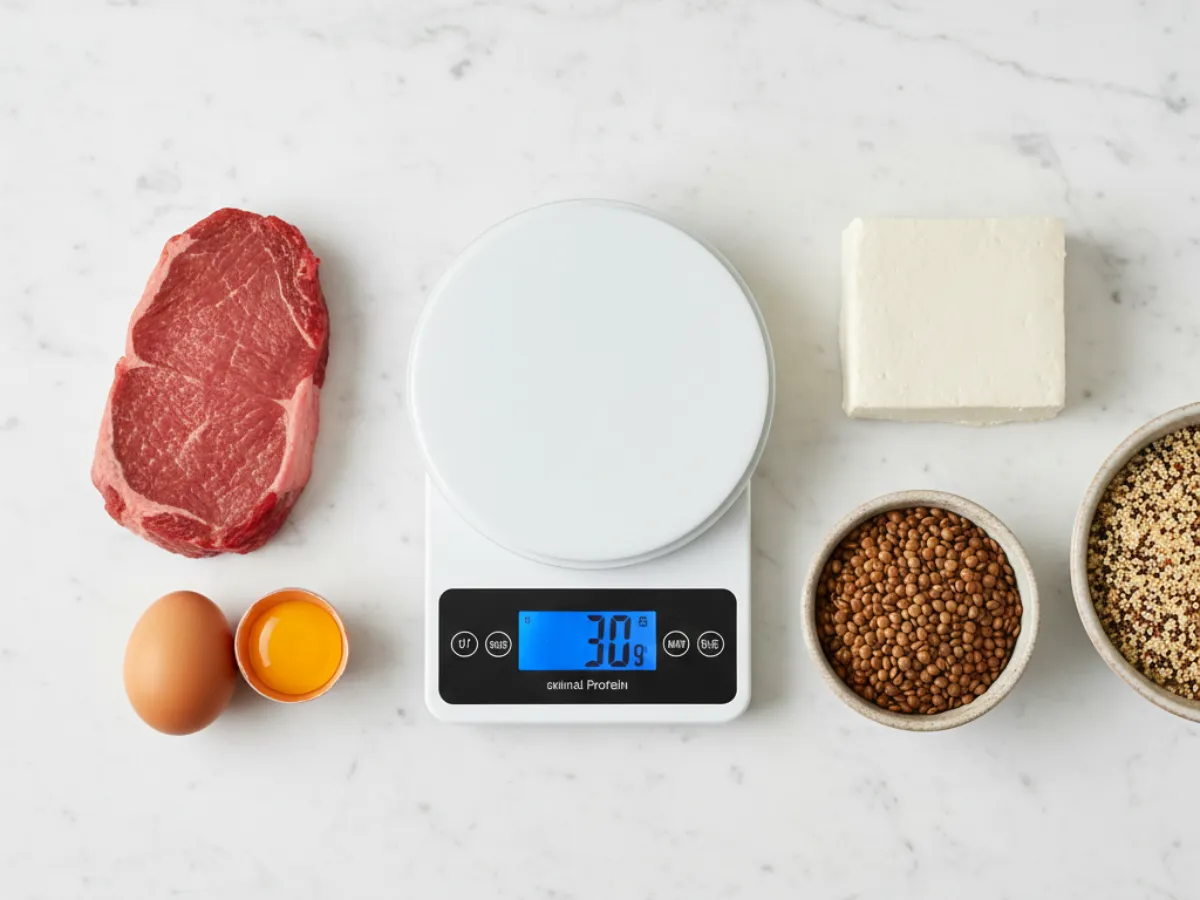
In the landscape of modern nutrition, protein has achieved near-mythical status. Walk down any supermarket aisle in 2025, and you will see “High Protein” stamped on everything from Greek yogurt and pasta to candy bars and water. It has become the darling of the wellness industry, touted as the solution for weight loss, muscle gain, and longevity.
But strip away the marketing, and confusion remains. The average person is often left asking fundamental questions: Do I really need a protein shake after a workout? Is plant protein actually as good as steak? Will eating too much damage my kidneys?
For English-speaking readers globally—whether you are a vegan runner in Portland or a keto-following executive in London—understanding protein is the single most effective lever you can pull to improve your body composition and health span. Protein is not just for bodybuilders; it is the architectural foundation of human biology.
This comprehensive guide moves beyond the “bro-science” to provide a clinical, data-driven look at protein. We will decode the math of daily requirements, compare bioavailability across food groups, and help you design a diet that fuels your life, not just your muscles.
1. The Biological Imperative: Why Protein Matters
To understand how much you need, you must first understand what protein actually is. Unlike carbohydrates and fats, which are primarily fuel sources, protein is a building block.
The Amino Acid Alphabet
Protein is made up of long chains of molecules called amino acids. There are 20 standard amino acids, but the human body can only create 11 of them. The other nine are known as Essential Amino Acids (EAAs).
-
The Rule: You must get these nine from food. If your diet lacks them, your body will catabolize (break down) its own muscle tissue to harvest them for vital organs.
Beyond Muscle: The Invisible Roles
While we associate protein with biceps and glutes, its physiological resume is far more impressive.
-
Enzymes & Hormones: Insulin, growth hormone, and digestive enzymes are all proteins. Without adequate intake, hormonal signaling falters.
-
Immune Defense: Antibodies, the soldiers of your immune system that fight off viruses and bacteria, are proteins. Chronic protein under-eating is a leading cause of compromised immunity.
-
Structure: Collagen and elastin, which keep your skin youthful and your joints functional, are structural proteins.
In essence, you are a protein structure held together by water and calcium. Every cell in your body is constantly breaking down and rebuilding protein—a process called protein turnover. If you don’t eat enough to replace what is lost, you enter a state of degeneration.
2. The Math: Calculating Your True Requirements
Here lies the greatest controversy in nutrition: How much is enough?
The Recommended Dietary Allowance (RDA) in the US and UK is set at 0.8 grams per kilogram of body weight. However, this number is widely misunderstood. The RDA is the minimum amount required to prevent deficiency (muscle wasting and illness), not the optimal amount for health or performance. It is the nutritional equivalent of the minimum wage.
The Modern Framework
In 2025, nutritional science categorizes needs based on activity levels and goals. We use the metric of grams per kilogram of body weight ($g/kg$).
1. The Sedentary Baseline ($1.0 – 1.2 g/kg$)
If you work a desk job and do little exercise, the old 0.8g is likely insufficient to prevent age-related muscle loss (sarcopenia).
-
Calculation: A 70kg person needs roughly 70g to 84g daily.
2. The Active Adult / Endurance Athlete ($1.4 – 1.6 g/kg$)
Runners, cyclists, and weekend warriors cause more tissue damage and therefore require more repair materials.
-
Calculation: A 70kg runner needs roughly 98g to 112g daily.
3. Strength & Physique Goals ($1.6 – 2.2 g/kg$)
If you are lifting weights to build muscle or are in a calorie deficit trying to lose fat, your needs skyrocket. In a deficit, protein is “muscle insurance,” preventing your body from burning muscle for fuel.
-
Calculation: A 70kg lifter needs roughly 112g to 154g daily.
The “Leucine Threshold”
It is not just about the daily total; it is about the “per meal” dose. To trigger Muscle Protein Synthesis (MPS)—the biological “on” switch for building tissue—you need a specific amount of the amino acid Leucine (approx 2.5g to 3g).
-
Practical Application: This generally equates to eating 25g to 35g of high-quality protein in a single sitting. Eating 5g of protein six times a day will not trigger MPS as effectively as eating 30g three times a day.
3. Animal vs. Plant: The Quality Debate
Not all protein is created equal. The “quality” of a protein source is determined by its Bioavailability (how much your body can absorb) and its Amino Acid Profile.
The Complete Package: Animal Protein
Animal sources (meat, dairy, eggs, fish) are “complete proteins.” They contain all nine essential amino acids in the exact ratios humans need.
-
Bioavailability: Very high. Eggs and whey protein have a biological value of nearly 100%, meaning almost every gram you eat is utilized.
The Puzzle Pieces: Plant Protein
Most plant sources are “incomplete.” They are usually low in one or more essential amino acids (typically lysine or methionine).
-
The Old Myth: You do not need to combine proteins at every single meal (e.g., eating rice and beans together instantly) to get a complete protein. The liver stores a pool of amino acids throughout the day.
-
The Modern Strategy: As long as you eat a variety of plant sources (legumes, grains, nuts) over a 24-hour period, you will get all the amino acids you need. However, plant protein is generally less bioavailable (60-80%) due to fiber and anti-nutrients, so vegans may need to eat slightly more total protein (~10% more) to absorb the same amount.
4. The Leaderboard: Best Sources Ranked
To optimize your diet, prioritize these sources based on nutrient density and the “Protein-to-Calorie” ratio.
Top Tier: Animal Sources
-
Whey Protein Isolate:
-
Profile: The gold standard for absorption. Rapid digestion makes it ideal post-workout.
-
Stats: ~25g protein per 110 calories.
-
-
Egg Whites / Whole Eggs:
-
Profile: The reference standard for biological value. The yolk contains crucial vitamins (Choline, B12).
-
Stats: ~6g protein per egg (70 calories).
-
-
Chicken Breast / Turkey:
-
Profile: High protein, very low fat. The staple of bodybuilding for a reason.
-
Stats: ~31g protein per 100g serving.
-
-
Greek Yogurt (0% Fat):
-
Profile: Packed with slow-digesting Casein protein, making it excellent before bed to trickle amino acids into the blood.
-
Stats: ~10g protein per 100g serving.
-
-
White Fish (Cod/Tilapia) & Salmon:
-
Profile: White fish is pure protein; Salmon adds essential Omega-3 fatty acids.
-
Top Tier: Plant Sources
-
Soy (Tofu, Tempeh, Edamame):
-
Profile: One of the few “complete” plant proteins. Tempeh is fermented, making it easier to digest.
-
Stats: ~12-19g protein per 100g.
-
-
Seitan (Wheat Gluten):
-
Profile: The “meat” of the plant world. Extremely high in protein but not suitable for celiacs (it is pure gluten).
-
Stats: ~25g protein per 100g.
-
-
Lentils:
-
Profile: High in fiber and iron. Excellent for gut health.
-
Stats: ~9g protein per 100g (cooked).
-
-
Nutritional Yeast:
-
Profile: A complete protein often used as a cheese substitute. Packed with B-vitamins.
-
Stats: ~8g protein per 2 tablespoons.
-
-
Pea Protein Powder:
-
Profile: The best vegan alternative to whey. High in leucine compared to other plants.
-
5. Timing, Myths, and Safety
Let’s address the elephant in the room: Safety and Scheduling.
The “Anabolic Window”
For years, gym-goers believed they had to chug a shake within 30 minutes of dropping the weights or their workout was wasted.
-
The Reality: The “window” is more like a barn door. It stays open for 24-48 hours after training. While eating protein within 2 hours is good practice, meeting your total daily intake is far more important than rushing to the locker room to drink a shake.
The Kidney Myth
“High protein destroys your kidneys.” This is perhaps the most persistent myth in nutrition history.
-
The Science: This claim comes from studies on patients with pre-existing kidney disease. For healthy individuals with functioning kidneys, high-protein diets (even up to 3g/kg) show no negative effects on renal function in long-term studies. The kidneys are designed to filter nitrogen; they adapt to the load just as muscles adapt to lifting weights.
Protein for Weight Loss: The Secret Weapon
If you are trying to lose weight, protein is your best friend for two reasons:
-
Satiety: Protein reduces the hunger hormone ghrelin better than carbs or fat. You naturally eat less when your diet is high in protein.
-
Thermic Effect of Food (TEF): Your body burns about 20-30% of the calories in protein just to digest it. If you eat 100 calories of chicken, your body only nets about 75 calories. Compare this to fat (TEF of 0-3%), where you net almost all 100 calories.
Conclusion: The Structural Foundation of Health
Protein is more than a macronutrient; it is a metabolic signal. It tells your body to build, repair, and defend.
In 2025, the debate is no longer about if you should prioritize protein, but how to do it sustainably. For the vast majority of readers, increasing intake to the 1.6g/kg range will yield noticeable benefits: better energy stability, improved body composition, and stronger immunity.
Whether you choose a steak or a seitan stir-fry is a matter of ethics and preference, not necessity. The biological machinery of the human body is remarkably adaptable, provided you supply it with the essential amino acids it craves.
Your Next Step:
Perform a “Protein Audit” for one day. Don’t change your diet, just log it. Check if you are hitting at least 1.2g per kg of your body weight. If not, identify one meal (usually breakfast) where you can swap a carb-heavy item (like toast) for a protein-dense one (like Greek yogurt or eggs).
FAQs
1. Can I get enough protein without protein powder?
Absolutely. Supplements are just processed food. They are convenient (hence the name “supplement”), but you can easily hit 150g+ of protein daily through whole foods like chicken, tuna, beans, and dairy. Whole foods are generally superior because they provide micronutrients and keep you fuller longer.22
2. Does cooking protein destroy it?
No. Cooking “denatures” protein, meaning it unravels the complex structure of the molecule.23 This actually aids digestion because your enzymes can access the amino acid bonds more easily. While charring meat (burning it) can create harmful compounds, standard cooking methods do not reduce protein content.
3. Is “Collagen Protein” good for muscle building?
Generally, no. Collagen is excellent for skin, hair, and joint health, but it has a very poor amino acid profile for muscle building (it is low in leucine and lacks tryptophan). Don’t count collagen peptides toward your daily muscle-building protein total.
4. Can I eat too much protein in one meal?
The old rule was “your body can only absorb 30g per meal.” This is false. Your body will absorb almost all the protein you eat; it just takes longer to digest a larger meal. However, there is a “muscle synthesis cap” around 30-40g. Eating 100g in one sitting isn’t harmful, but the excess won’t build extra muscle—it will just be used for energy.
5. What is the best protein for vegans?
Variety is key, but Soy and Pea/Rice blends are top tier. Soy is a complete protein on its own.25 Pea protein is high in amino acids but low in methionine, while rice protein is high in methionine but low in lysine. Combining pea and rice protein creates a profile almost identical to whey.
References
- International Society of Sports Nutrition (ISSN) – Position Stand on Protein: https://jissn.biomedcentral.com/articles/10.1186/s12970-017-0177-8
- PubMed – Dietary Protein for Muscle Hypertrophy (Systematic Review 2023): https://pubmed.ncbi.nlm.nih.gov/35187864/
- Harvard T.H. Chan School of Public Health – The Nutrition Source: Protein: https://www.hsph.harvard.edu/nutritionsource/what-should-you-eat/protein/
- Examine.com – Optimal Protein Intake Guide: https://examine.com/guides/protein-intake/
- National Institutes of Health (NIH) – Protein and Renal Function (No Harm Evidence): https://pubmed.ncbi.nlm.nih.gov/30383278/