In a world obsessed with wellness, the grocery store aisle has become a battleground. On one side, you have the “Clean Eaters,” scrutinizing every label for additives, gums, and unpronounceable ingredients. On the other, the “Balanced Eaters,” who might toss a bag of organic spinach into the cart alongside a pint of premium ice cream.
For global English-speaking readers—from the fitness enthusiasts in London to the busy parents in Sydney—the distinction is more than just semantics; it is a fundamental difference in psychology, sustainability, and metabolic health. As we move through 2025, the conversation is shifting from restriction to flexibility.
This article dissects the core differences between Clean Eating and Balanced Eating. We will move beyond the Instagram hashtags to explore the physiological impacts, the risks of “orthorexic” tendencies, and the data-backed reality of which method actually leads to long-term health.
1. The Clean Eating Phenomenon: Purity or Prison?
“Clean eating” is not a clinical term; it is a movement. Born from a desire to escape the ultra-processed food environment, it focuses on food quality above all else.
The Core Philosophy
The clean eating framework is binary: foods are either “clean” (compliant) or “dirty” (forbidden).
-
Whole Foods Only: Fruits, vegetables, lean meats, nuts, and seeds.
-
Elimination: No gluten, dairy, refined sugar, or additives.
-
The “Purity” Mindset: If an ingredient wasn’t in your grandmother’s kitchen, it shouldn’t be on your plate.
The Psychological Trap: Orthorexia Nervosa
While eating whole foods is objectively healthy, the rigidity of clean eating has a dark side. Recent psychological data suggests a strong correlation between strict clean eating and Orthorexia Nervosa—an unhealthy obsession with eating healthy food.
Narrative Insight: Consider “Sarah,” a graphic designer. She started “eating clean” to clear up her skin. Six months later, she refuses to eat at restaurants because she cannot verify the oil used to sauté the vegetables. She brings Tupperware to weddings. Her physical health is “perfect,” but her social health is in rapid decline.
This is where clean eating fails for many. It demands a level of control that is often incompatible with modern life, leading to “food fear”—the anxiety that a single “unclean” ingredient will ruin your progress.
2. The Balanced Eating Approach: The 80/20 Rule
Balanced eating, often formalized as the 80/20 Rule or Flexible Dieting, operates on the principle of inclusion rather than exclusion. It acknowledges that food is fuel, but it is also culture, celebration, and pleasure.
How the Math Works
The 80/20 rule is not vague; it is a mathematical approach to weekly nutrition.
-
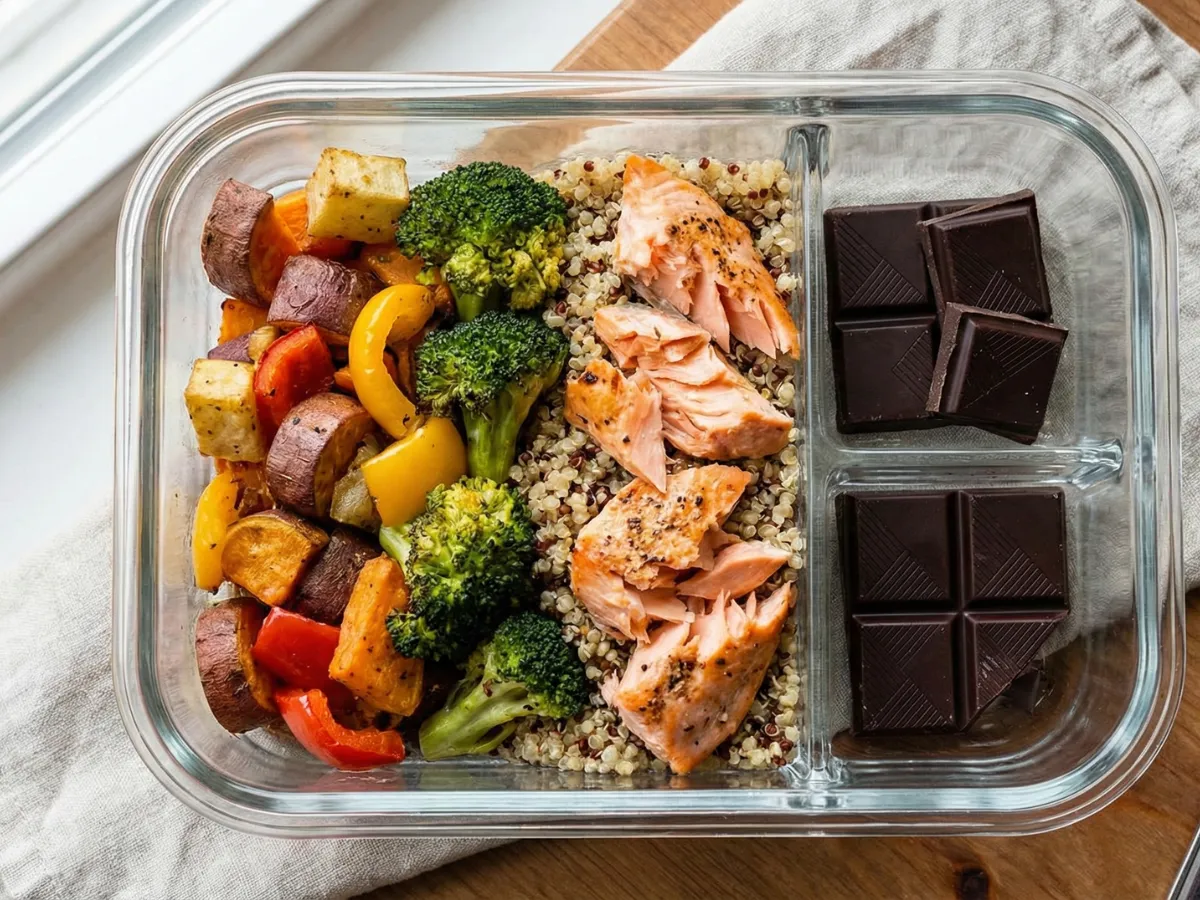
80% Nutrient Density: The majority of your intake comes from whole, unprocessed sources (lean protein, complex carbs, healthy fats).
-
20% Soul Food: The remaining calories are reserved for foods you enjoy purely for taste (dessert, pizza, a glass of wine).
If you eat three meals a day (21 meals a week), “Balanced Eating” allows for roughly four meals per week to be relaxed. This prevents the “binge-restrict” cycle common in clean eating. When no food is off-limits, the urge to binge diminishes.
The Metabolic Advantage
From a metabolic standpoint, your body does not require 100% “clean” fuel to function optimally. The liver and kidneys are highly efficient detoxification organs. A moderate intake of processed foods, within a calorie-controlled diet, does not halt fat loss or damage health markers, provided the foundational 80% is solid.
3. Comparative Analysis: Cost, Adherence, and Science
Let’s look at the data. Which method holds up under the scrutiny of real-world application?
Adherence Rates
The most effective diet is the one you can stick to.
-
Restrictive Diets (Clean Eating/Keto): Studies generally show high dropout rates (often 50%+) after 6–12 months. The mental fatigue of constant vigilance leads to “diet burnout.”
-
Flexible Diets (Balanced/Mediterranean): Show significantly higher long-term adherence (often 70-85%). The flexibility acts as a pressure valve, allowing life to happen without derailing the diet.
The Economic Reality
In 2024, the World Bank and FAO reported that over 2.6 billion people globally could not afford a healthy diet.
-
Clean Eating is Expensive: It requires premium ingredients (organic, grass-fed, gluten-free alternatives) that cost significantly more than standard options.
-
Balanced Eating is Accessible: It allows for frozen vegetables, conventional produce, and occasional convenience foods, making it a more viable option for the average household budget.
Mental Health Impact
A 2024 review on dietary behaviors highlighted that flexibility is a predictor of lower BMI and better psychological well-being. Rigid “all-or-nothing” thinking is strongly linked to higher BMI over time due to the rebound weight gain that follows periods of strict restriction.
| Feature | Clean Eating | Balanced Eating |
| Primary Focus | Food Purity & Quality | Macronutrients & Flexibility |
| Social Life | Difficult / Isolating | Adaptable / Inclusive |
| Cost | High ($$$) | Moderate ($$) |
| Risk Factor | Orthorexia / Bingeing | Overindulgence (if unchecked) |
| Long-Term Success | Low (High burnout risk) | High (Sustainable lifestyle) |
4. Real-World Application: Navigating the Middle Ground
Is there a way to merge the two? The emerging trend of “Clean-ish” eating attempts to bridge the gap.
The Grocery Store Strategy
You do not need to fear the center aisles of the grocery store.
-
Prioritize the “Big Rocks”: Focus on protein and fiber. If a packaged snack has 15g of protein and 5g of fiber, it is a metabolic win, even if it contains a preservative.
-
Read Labels for Value, Not Just Avoidance: Instead of asking “What is bad in this?”, ask “What is good in this?” Does it offer iron? Calcium? Satiety?
-
The “Add, Don’t Subtract” Method: Instead of banning pizza, eat the pizza but add a large side salad and grilled chicken breast. This improves the glycemic response of the meal without denying the craving.
Case Study: The Corporate Executive
Consider “Mark,” a 45-year-old executive. He tried clean eating but failed repeatedly due to business dinners. Switching to a Balanced approach, he applied the “Good Enough” principle. At dinners, he skips the bread basket (reducing empty calories) but enjoys the steak with sauce and a glass of wine. He lost 15lbs in 4 months not by being perfect, but by being consistent.
Conclusion: The Best Diet is the One That Ends
The goal of nutrition is to support your life, not to consume it.
Clean Eating offers a valuable lesson: food quality matters. We should strive to eat whole, unprocessed foods whenever possible. However, when taken to an extreme, it can become a cage of anxiety and social isolation.
Balanced Eating offers a lifeline: it grants permission to be human. It recognizes that a slice of birthday cake is not a toxic event but a social one. It supports mental health just as much as physical health.
As we look toward the future of nutrition, the data is clear: Rigidity breaks. Flexibility bends. For the vast majority of people, a balanced approach—where kale and cookies can coexist—is not just the happier choice; it is the healthier one.
Your Next Step:
Audit your last week of eating. Did you stress over a meal out? Next week, try the 80/20 rule: Plan 17 nutrient-dense meals, and intentionally schedule 4 “fun” meals. See how your energy and mood respond.
FAQs
1. Is clean eating better for weight loss than balanced eating?
Not necessarily. Weight loss is primarily driven by a calorie deficit. While clean foods are often lower in calories, you can still overeat “healthy” foods (like nuts and avocados). Balanced eating often leads to better weight loss maintenance because it prevents binge-eating cycles.
2. Can I build muscle on a balanced diet?
Yes. Muscle building requires adequate protein and energy. As long as you hit your daily protein targets (roughly 1.6g to 2.2g per kg of body weight), the source of the remaining calories (whether from “clean” rice or “balanced” pasta) matters less for hypertrophy.
3. Does balanced eating mean I can eat junk food all day?
No. The “20%” in the 80/20 rule is a cap, not a target. It implies that the majority (80%) of your diet must still be nutrient-dense whole foods to provide necessary vitamins, minerals, and fiber.
4. What is the “Clean Label” trend?
The Clean Label trend refers to consumer demand for products with shorter ingredient lists and no artificial additives. While helpful for transparency, a “clean label” does not automatically mean a product is low in sugar or calories.
5. How do I stop feeling guilty when I don’t eat clean?
This guilt is a symptom of “food morality”—labeling foods as good or bad. shifting your mindset to view food as neutral data (protein, carbs, fats) helps. Remind yourself that one meal cannot make you unhealthy, just as one salad cannot make you healthy. Consistency over time is what counts.
References
- World Health Organization (WHO) – Healthy Diet Fact Sheet: https://www.who.int/news-room/fact-sheets/detail/healthy-diet
- National Eating Disorders Association – Orthorexia: Harvard T.H. Chan School of Public Health – The Best Diet: Quality Counts: https://www.hsph.harvard.edu/nutritionsource/healthy-weight/best-diet-quality-counts/
- NIH PubMed – Defining a Healthy Diet (Dietary Patterns): https://pmc.ncbi.nlm.nih.gov/articles/PMC7071223/
- UN News – Hidden Costs of Unhealthy Eating (2024 Report): https://news.un.org/en/story/2024/11/1156686