The statistics on dieting are grim. Research consistently shows that nearly 95% of diets fail within one to five years. The reason is rarely a lack of willpower; it is the unsustainability of perfection. Most modern diets demand 100% compliance, turning a single cookie into a “failure” that triggers a shame spiral and eventual abandonment of the plan.
Enter the 80/20 Rule, also known as the Pareto Principle of Nutrition.
For English-speaking readers navigating a world of conflicting wellness trends—from Keto to Carnivore—the 80/20 rule offers a refreshing alternative. It is not a “diet” in the traditional sense; it is a mathematical framework for flexibility. It posits that you can achieve optimal health, weight loss, and metabolic stability by being “good” 80% of the time and “human” the other 20%.
This article explores the mechanics of the 80/20 rule, the psychological science behind why it works, and how to apply it to your life without falling into the common traps of overindulgence.
1. Decoding the 80/20 Philosophy
The concept borrows from Italian economist Vilfredo Pareto, who observed that 80% of outcomes often come from 20% of causes. In nutrition, we flip this: 80% of your results come from the consistency of your core habits, while the remaining 20% provides the psychological cushion to keep you going.
The 80%: The Foundation
This portion represents your “fuel.” It is non-negotiable for physiological health.
-
Whole Foods: Unprocessed meats, fish, eggs, vegetables, fruits, legumes, and whole grains.
-
Hydration: Water, herbal teas, and black coffee.
-
Micronutrients: Foods rich in vitamins, minerals, and fiber to drive metabolism and satiety.
The 20%: The “Soul Food”
This portion represents “pleasure.” It prevents the feeling of deprivation.
-
Indulgences: Processed foods, alcohol, sugary desserts, or fried foods.
-
Social Eating: That slice of birthday cake, the popcorn at the movies, or the pizza on Friday night.
Key Insight: The 20% is not a “cheat” (which implies doing something wrong). It is a calculated part of the plan. When you legalize these foods, you strip them of their power to cause guilt.
2. The Math: How to Calculate Your Split
Many people fail at the 80/20 rule because they guess the percentages. To make this effective, you need to be specific. There are two primary ways to calculate this: by meals or by calories.
Method A: The Meal-Based Calculation (Easiest for Beginners)
If you eat three standard meals a day, that equals 21 meals per week.
-
80% of 21 = ~17 meals.
-
20% of 21 = ~4 meals.
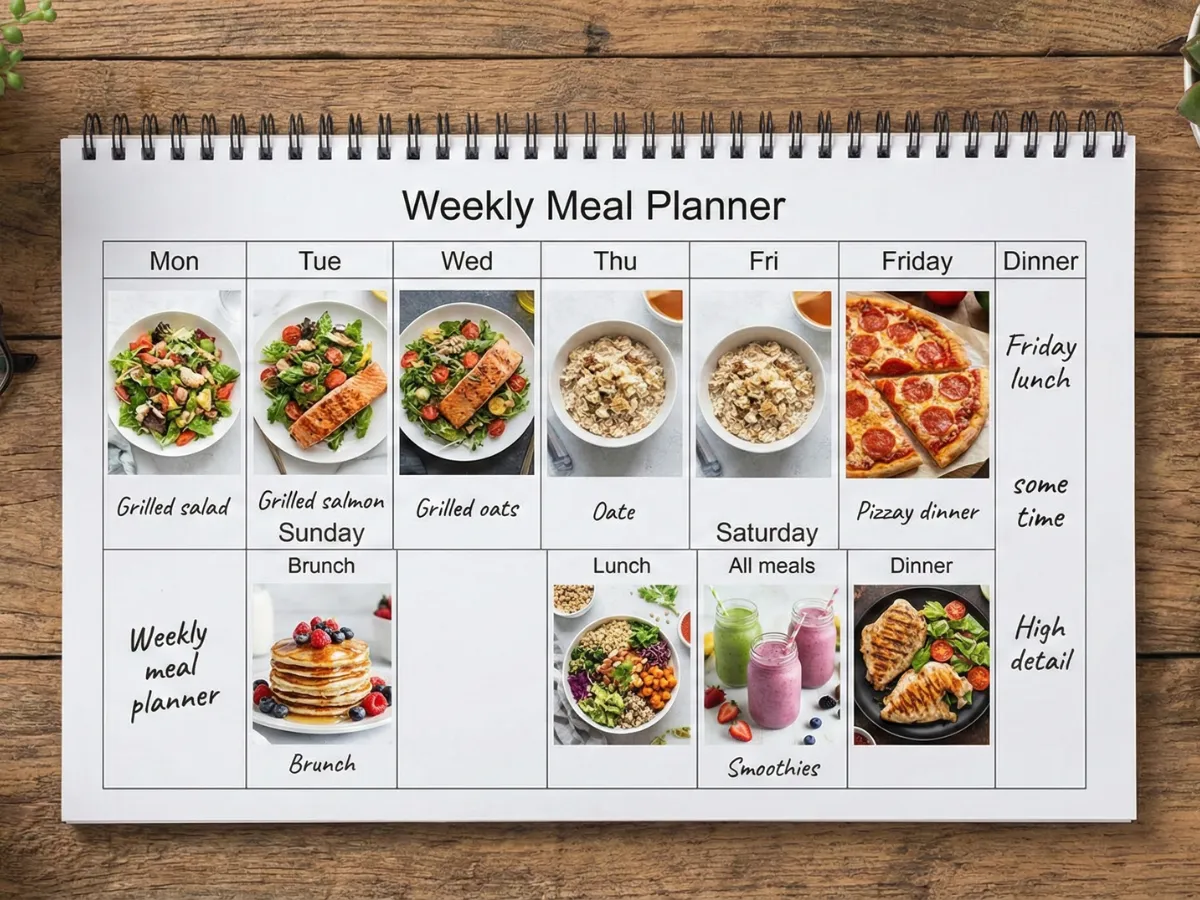
In Practice: You eat nutrient-dense, clean meals from Monday breakfast through Friday lunch. Then, on Friday night, Saturday night, and Sunday brunch, you relax your standards. This structure allows for four “off-plan” meals per week while keeping the vast majority of your intake healthy.
Method B: The Calorie-Based Calculation (Best for Fat Loss)
If you are tracking macros, you can apply the percentage to your daily caloric goal.
-
Daily Goal: 2,000 calories.
-
80% (1,600 calories): Allocated to chicken, rice, broccoli, olive oil, etc.
-
20% (400 calories): Allocated to a chocolate bar, a glass of wine, or a small bag of chips.
Narrative Example: “James,” a software engineer, struggled with binge eating on weekends. By adopting Method A, he realized he could have a burger on Tuesday night (one of his 4 flexible meals) instead of “white-knuckling” it until Friday. This release of pressure prevented his usual weekend binge, leading to a net calorie reduction over the week.
3. The Psychology of Sustainability
Why does this work when strict diets fail? The answer lies in Restraint Theory.
Breaking the “What-the-Hell” Effect
Psychologists define the “What-the-Hell” effect as the moment a dieter violates a strict rule (e.g., eating one cookie) and subsequently abandons the entire diet (“I already messed up, so I might as well eat the whole box”).
The 80/20 rule eliminates this trigger. Since the cookie is part of the 20%, eating it is not a failure—it is compliance. This preserves your self-efficacy and prevents the downward spiral of binge eating.
Metabolic Flexibility
Physiologically, your body handles occasional processed foods well if the baseline is healthy. High fiber and protein intake during the 80% phase stabilize blood sugar, meaning the occasional spike from the 20% phase is blunted and quickly normalized by the body’s insulin response.
4. Common Pitfalls: When 20% Becomes 50%
While flexible, the 80/20 rule is not fool-proof. There are specific traps that can turn this balanced approach into a weight-gain trap.
The “Weekend Warrior” Mistake
Some interpret the rule as “Eat clean Monday to Friday, eat everything Saturday and Sunday.”
-
The Math: If you binge uncontrollably for two full days, you can easily consume enough surplus calories to undo the deficit created during the week.
-
The Fix: The 20% should be spread out or controlled. It is 4 meals, not 2 days.
The Portion Distortion
The 20% applies to frequency or calories, not volume.
-
Example: A “treat meal” of pasta is fine. A “treat meal” consisting of an entire large pizza, garlic bread, and a liter of soda is a binge, not a treat.
-
Rule of Thumb: Even during a 20% meal, stop when you are full.
Ignoring the 80% Quality
If your “healthy” 80% consists of “diet” processed foods (low-fat crackers, diet sodas, protein bars), you aren’t getting the nutrient density required to curb cravings. The 80% must be real food to provide the satiety needed to resist overindulging during the 20%.
Conclusion: The Long Game
The 80/20 rule is not a quick fix; it is a permanent operating system for nutrition. It acknowledges that food is more than just carbon and nitrogen—it is connection, culture, and joy.
By accepting that perfection is the enemy of progress, you unlock a sustainable path to health. You can attend the wedding, eat the cake, and wake up the next morning without guilt, ready to return to your healthy baseline. In 2025, the healthiest diet is the one you can maintain for the rest of your life.
Your Next Step: Look at your calendar for the upcoming week. Identify exactly four specific times where you will use your 20% (e.g., “Friday Date Night,” “Sunday Family Brunch”). Write them down. For every other meal, commit to whole, unprocessed foods.
FAQs
1. Will I lose weight on the 80/20 diet? Yes, provided you are in an overall calorie deficit. The 80/20 rule helps you maintain that deficit by preventing binges, but portion control is still necessary. You cannot eat unlimited calories during the 20% window.
2. Can I save all my 20% for the weekend? Technically yes, but it is risky. “Banking” all your treats for the weekend often leads to bloating, lethargy, and a difficult transition back to healthy eating on Monday. Spreading them out tends to be better for blood sugar stability and mental cravings.
3. Does the 80/20 rule apply to diabetics? People with diabetes should consult a doctor. While the principle of moderation holds, the “20%” for a diabetic might still need to be low-glycemic or carb-controlled to avoid dangerous blood sugar spikes.
4. What if I feel guilty eating the 20% foods? This is normal after years of diet culture. Remind yourself that the 20% is prescribed. You are following the plan by eating the treat. Over time, the guilt will fade as you see that one treat does not ruin your progress.
5. Is this suitable for athletes? Yes, many athletes follow an 80/20 or 90/10 split. They need high-quality fuel for performance (the 80%) but also require high calories that can sometimes be easily achieved through denser, “fun” foods (the 20%) to maintain weight.