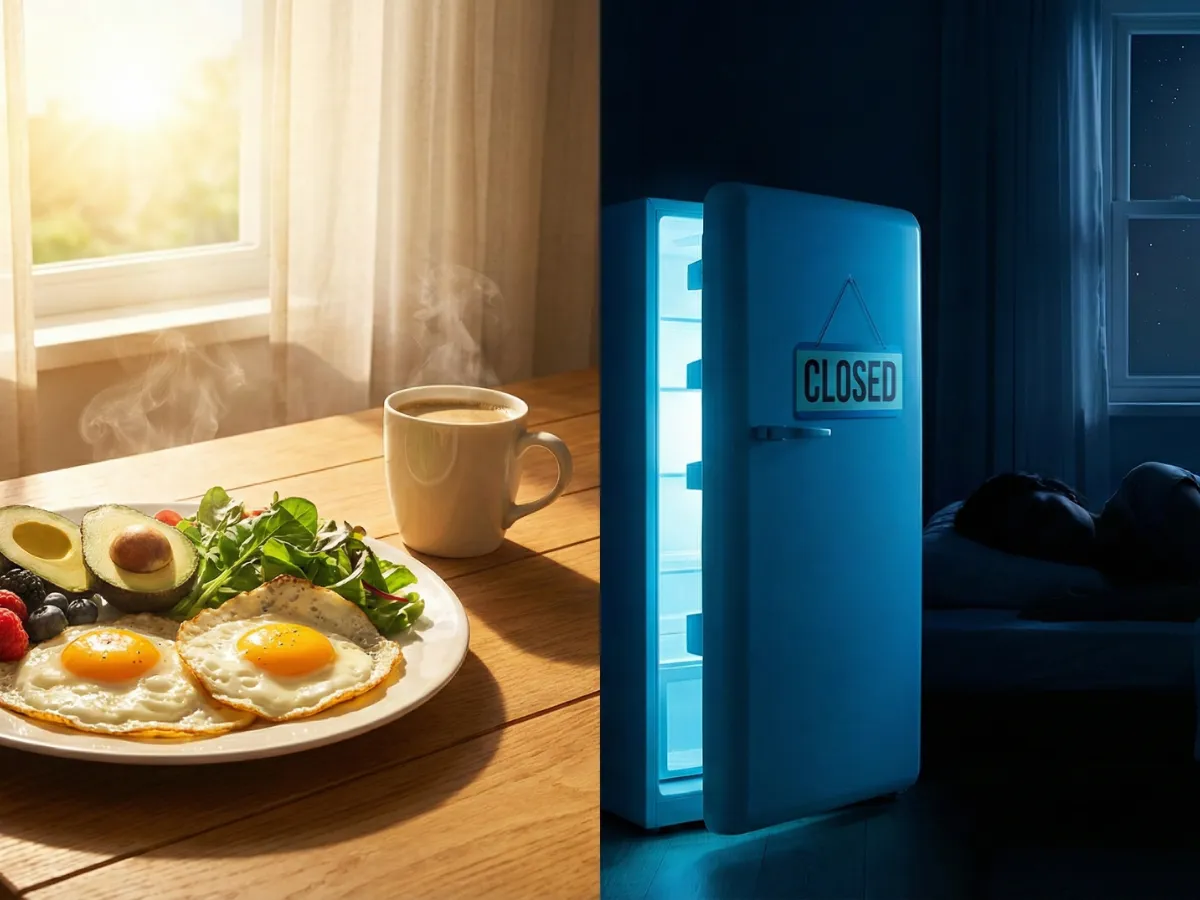
For decades, the golden rule of nutrition was simple math: “Calories in, calories out.” We were told that a 500-calorie burger eaten at noon was biologically identical to a 500-calorie burger eaten at midnight. In 2025, that rule is being rewritten.
Emerging research in Chrononutrition—the study of how nutrition interacts with our internal body clock—reveals that when you eat is just as critical as what you eat. Your body is not a bank account that stays open 24/7; it is a factory with shifts. There are times when it is primed to burn fuel, and times when it is shutting down for repairs.
For English-speaking readers globally, from the late-night workers in New York to the early risers in Melbourne, understanding this biological rhythm is the missing link to sustainable weight control and boundless energy. This article explores the optimal timing for your meals, backed by the latest science.
1. The Science of the Body Clock: Why Timing Matters
Every cell in your body has a clock. These peripheral clocks are synchronized by a master clock in the brain (the suprachiasmatic nucleus), which is set by light and food.
The Insulin-Melatonin Clash
The most critical mechanism here is the relationship between insulin (the storage hormone) and melatonin (the sleep hormone).
-
Morning/Afternoon: Your pancreas is highly efficient. When you eat, insulin is released, and sugar is quickly shuttled into muscles for energy.
-
Evening: As the sun sets, your body produces melatonin to prepare for sleep. Melatonin inhibits insulin secretion.
The Result: If you eat a heavy meal when melatonin is high (late at night), your body struggles to clear the sugar from your blood. Instead of being burned for energy, that fuel is far more likely to be stored as visceral fat. A 2024 study confirmed that late-night eating is independently associated with higher visceral fat and insulin resistance, even when calorie intake is controlled.
2. The Ideal Daily Schedule: Optimizing Your “Fuel Windows”
To maximize metabolic efficiency, we need to map our meals to our circadian rhythm. Here is the data-backed blueprint for a perfect day of eating.
Breakfast: The Metabolic Ignition (7:00 AM – 9:00 AM)
For years, “Intermittent Fasting” trends led many to skip breakfast. However, recent data suggests that for women especially, and for overall cortisol regulation, a nutrient-dense breakfast is non-negotiable.
-
Why: “Diet-Induced Thermogenesis” (DIT)—the calories burned digesting food—is more than twice as high in the morning than in the evening.
-
What to Eat: High protein. A study showed that a high-protein breakfast prevents cravings later in the day by stabilizing ghrelin (the hunger hormone).
-
The Verdict: Do not skip. Delaying your first meal until noon often leads to a compensatory binge at dinner—the worst time to overeat.
Lunch: The Power Hour (12:00 PM – 1:30 PM)
This is when your metabolism is firing on all cylinders.
-
Why: Your digestive enzymes are most active during the middle of the day. This is the safest time to consume your largest intake of carbohydrates (rice, pasta, bread), as your body will likely burn them off before bedtime.
-
The Energy Slump: If you experience the “2:00 PM crash,” it is likely because your lunch was too heavy in refined carbs or you waited too long to eat, causing a glucose spike and crash.
Dinner: The Early Bird Advantage (5:00 PM – 7:00 PM)
This is the most impactful change you can make.
-
The Science: 2025 research indicates that finishing dinner by 7:00 PM significantly improves 24-hour blood glucose levels.
-
The “3-Hour Rule”: You must stop eating at least three hours before bed. This allows the stomach to empty, preventing acid reflux and ensuring your body enters “deep sleep” mode rather than “digestion” mode.
-
What to Eat: Focus on fiber and protein. Avoid heavy fats and sugars, which delay gastric emptying and keep your core body temperature high, disrupting sleep quality.
3. Time-Restricted Eating (TRE): Compressing the Window
It is not just about the specific hour, but the duration of your eating window. This is the evolution of Intermittent Fasting, moving from “skipping meals” to “compressing meals.”
The Sweet Spot: 10 Hours
Current consensus suggests an eating window of 10 hours (e.g., 8:00 AM to 6:00 PM) is the most sustainable for long-term health.
-
Metabolic Reset: This leaves a 14-hour fasting window. During this time, the body activates autophagy, a cellular cleanup process that recycles damaged cells and reduces inflammation.
-
Early vs. Late TRE: “Early TRE” (eating 8am-4pm) is metabolically superior to “Late TRE” (eating 12pm-8pm). If you must choose, shift your window earlier.
Narrative Insight: Consider “David,” a 40-year-old accountant. He didn’t change what he ate but changed when. Instead of skipping breakfast and eating heavy dinners at 9 PM, he started eating a large breakfast at 8 AM and finishing dinner by 6 PM. In six weeks, he lost 8 pounds and, more importantly, finally slept through the night without waking up with heartburn.
4. The Danger Zone: Late Night Snacking
Eating after 9:00 PM is arguably the most damaging habit for modern health. It is not just about the calories; it is about circadian misalignment.
When you eat late:
-
Sleep Disruption: Digestion raises body temperature. To sleep, your core temperature must drop. Late eating keeps you hot and restless.
-
Fat Storage: Your body is in “storage mode,” not “burn mode.”
-
Brain Fog: Poor sleep quality from digestion leads to increased grogginess and cravings for sugar the next morning, restarting the cycle.
The Fix: If you are truly hungry at 10 PM, it is usually thirst or boredom. Drink herbal tea. If you must eat, choose something small and rich in tryptophan (like a few cherries or a small piece of turkey) rather than chips or cookies.
Conclusion: Sync Your Watch, Save Your Health
The old adage “Breakfast like a king, lunch like a prince, dinner like a pauper” has stood the test of time because it aligns perfectly with our biology.
Weight control is not just about willpower; it is about timing. By fighting your body clock—eating heavy meals when your body wants to sleep—you are swimming upstream. By aligning your fork with the sun, you harness your body’s natural rhythms to burn fat, stabilize energy, and repair cells.
In 2025, let’s stop fearing food and start respecting time.
Your Next Step: Tomorrow, set a “Kitchen Curfew.” Decide on a time (e.g., 7:30 PM) after which the kitchen is closed. Brush your teeth immediately after your last meal to signal to your brain that eating is done for the day. Try this for three days and monitor your morning energy levels.
FAQs
1. Is it bad to work out on an empty stomach in the morning? Generally, no. “Fasted cardio” can increase fat oxidation during the workout. However, for high-intensity interval training (HIIT) or heavy lifting, having a small snack (like a banana) 30 minutes prior can improve performance without breaking the metabolic benefits of the morning.
2. I work night shifts. How do I apply this? Shift workers face unique challenges. Try to eat your main meal before your shift starts (your “morning”). During the night shift, avoid heavy, carb-rich meals. Snack on light protein (nuts, yogurt) to maintain alertness without spiking blood sugar, and avoid eating heavily right before you go to sleep in the morning.
3. Does coffee count as breaking my fast? Black coffee or tea does not break a metabolic fast and can actually aid autophagy. However, adding sugar, milk, or creamer does spike insulin, which technically breaks the fast.
4. Can I eat fruit at night? While fruit is healthy, it is high in sugar (fructose). Eating a large fruit salad at 10 PM can still spike blood sugar. It is better to eat fruit earlier in the day when your insulin sensitivity is higher.
5. What if I am not hungry in the morning? Lack of morning hunger is often a sign of late-night eating. If you eat a heavy dinner at 9 PM, you won’t be hungry at 7 AM. Try reducing your dinner size and eating earlier; your morning appetite should return naturally within a few days.
References
-
Frontiers in Nutrition – Chrononutrition and Health (2024 Editorial): https://www.frontiersin.org/journals/nutrition/articles/10.3389/fnut.2024.1516940/full
-
Verywell Health – Best Time to Eat Lunch (Dec 2025 Review): https://www.verywellhealth.com/best-time-to-eat-lunch-11852777
-
MDPI Nutrients – Early Time-Restricted Eating & Weight Loss (2025 Trial): https://www.mdpi.com/2072-6643/17/6/1022
-
Northwestern Medicine – The Best Times to Eat: https://www.nm.org/healthbeat/healthy-tips/nutrition/best-times-to-eat
-
Medical News Today – Eating Late and Blood Sugar Control (July 2025): https://www.medicalnewstoday.com/articles/eating-late-in-the-evening-could-make-blood-sugar-control-harder-for-the-body