
Table of Contents
Toggle📌 Key Takeaways
-
Excessive caloric restriction triggers metabolic adaptation, where resting metabolic rate drops by 15–30%—making fat loss progressively harder and weight regain easier .
-
Protein underconsumption is among the most common errors; at least 30 grams per meal supports muscle preservation, satiety, and metabolic rate during a caloric deficit .
-
Eliminating entire food groups, especially carbohydrates, is not supported by evidence for long-term fat loss; high-fiber, low-glycemic carbohydrates support gut health and satiety .
-
Weight loss plateaus affect approximately 85% of dieters and are predictable physiological responses, not personal failures .
-
The best diet for fat loss is the one an individual can adhere to consistently—adherence, not macronutrient composition, predicts long-term success .
Introduction
The gap between fat loss theory and fat loss reality claims most beginners within the first six months. Enthusiasm collides with physiology. The initial rapid drop on the scale—primarily water and glycogen—creates expectations that the body cannot sustain. When progress slows, discouragement follows, and old eating patterns return, often with additional weight regain .
Clinical evidence consistently demonstrates that weight loss plateaus affect approximately 85% of individuals attempting to reduce body weight, typically occurring within weeks to months of initiating a program . This is not a failure of willpower. Metabolic adaptation, hormonal shifts, and the loss of lean tissue conspire to reduce energy expenditure precisely when the individual expects accelerating results.
This article identifies the evidence-based errors that beginners most frequently make, explains the physiological mechanisms through which these errors undermine fat loss, and provides clinically sound strategies to avoid or correct them. The information is intended for individuals beginning a fat loss journey, as well as health professionals guiding patients toward sustainable outcomes.
Error 1: Excessive Caloric Restriction
The most intuitive and most damaging error beginners make is cutting calories too aggressively. The reasoning appears sound: if a moderate deficit produces moderate fat loss, an extreme deficit should produce extreme fat loss. Metabolism does not operate on this linear logic.
The Metabolic Adaptation Response
When caloric intake drops severely—typically below 1,200 kcal daily for women or 1,500 kcal for men—the body interprets the deficit as a survival threat. Research published by the National Institutes of Health documents that resting metabolic rate can drop by 15–30% in response to chronic under-eating, a reduction exceeding what can be explained by body mass loss alone . This adaptive thermogenesis evolved to preserve energy during famine. The modern environment has not eliminated the mechanism, only the context in which it activates.
The consequences cascade. Thyroid hormone conversion shifts toward the inactive reverse T3, reducing cellular metabolic activity. Non-exercise activity thermogenesis—the energy expended through fidgeting, posture maintenance, and spontaneous movement—declines unconsciously. Individuals move less, sit more, and adopt more energy-efficient movement patterns without awareness . Hunger hormones surge.
The Clinical Correction
A caloric deficit of 500–750 kcal per day produces approximately 0.5–1 kg of weight loss per week, the rate recommended by the American College of Cardiology, the American Heart Association, and The Obesity Society . This moderate approach maximizes fat loss while minimizing the metabolic adaptations that drive plateaus and rebound weight gain.
-
Calculate estimated maintenance calories using a validated formula such as Mifflin-St Jeor
-
Subtract 500–750 kcal, never dropping below 1,200 (women) or 1,500 (men)
-
Adjust based on biofeedback: energy levels, sleep quality, hunger between meals, and rate of loss over two-week periods
Error 2: Neglecting Protein Intake
Among the most frequent weight loss mistakes identified by registered dietitian nutritionists is underestimating protein’s role during a caloric deficit . Beginners often reduce all macronutrients proportionally, inadvertently creating a protein intake too low to preserve lean tissue.
Why Protein Matters During Fat Loss
Protein serves three critical functions during energy restriction. It stimulates muscle protein synthesis, counteracting the catabolic environment created by a caloric deficit. It provides the highest satiety per gram of any macronutrient, reducing spontaneous energy intake at subsequent meals. And it carries a thermic effect of 20–30%, meaning a substantial portion of protein calories is expended during digestion.
Without adequate protein, the body enters negative nitrogen balance. Muscle protein breakdown exceeds synthesis. Liberated amino acids are directed toward gluconeogenesis. Research indicates that 25% or more of weight lost during caloric restriction can come from lean tissue when protein intake and resistance exercise are insufficient . Each kilogram of muscle lost reduces daily energy expenditure by approximately 13–15 kcal, directly impairing ongoing fat loss.
How to Distribute Protein
Studies suggest that consuming approximately 30 grams of protein per meal supports optimal metabolic function and appetite control . The distribution matters as much as the total.
-
Breakfast: Two large eggs plus 170 g Greek yogurt provides roughly 30 g protein
-
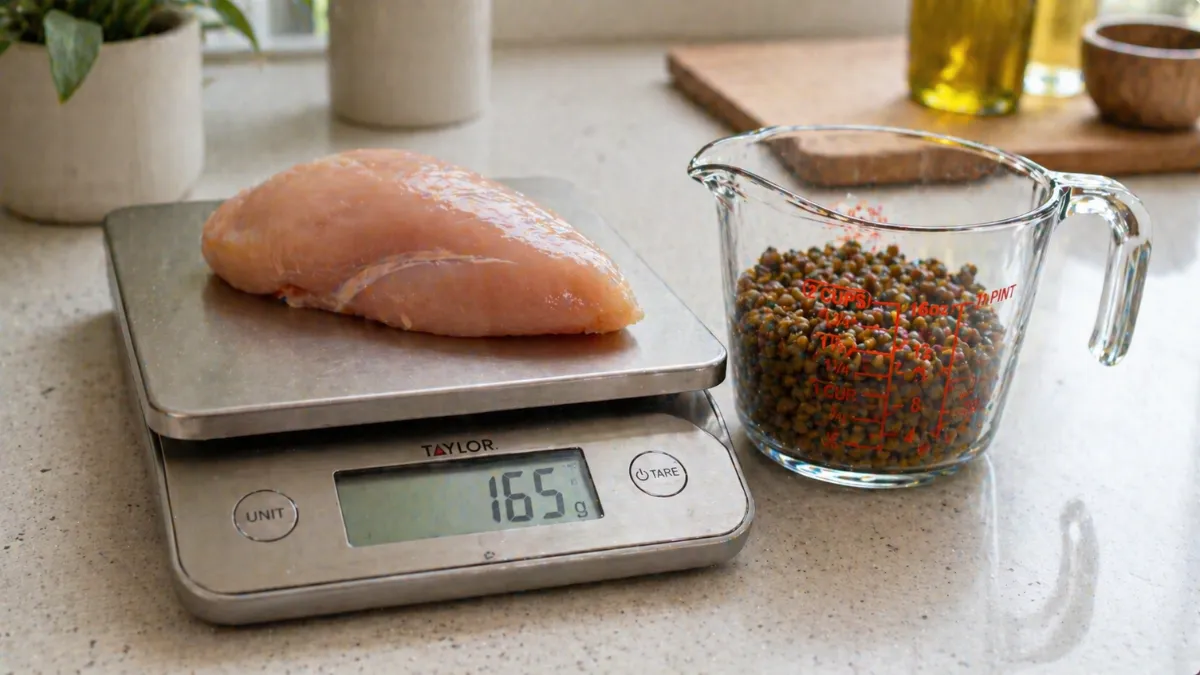
Lunch: 120 g chicken breast provides roughly 35 g protein
-
Dinner: 140 g salmon fillet provides roughly 30 g protein
-
Plant-based alternatives: 200 g lentils, 150 g firm tofu, or legumes combined with whole grains
Error 3: Eliminating Entire Food Groups
Completely eliminating carbohydrates represents one of the most common and misguided weight loss mistakes . The strategy produces dramatic initial scale changes—primarily glycogen and water loss—but creates long-term adherence problems and potential nutrient inadequacies.
The Carbohydrate Misunderstanding
Healthy carbohydrate sources, including legumes, fruits, vegetables, and whole grains, provide dietary fiber, energy substrates, and essential micronutrients. These foods feed beneficial gut bacteria, which produce short-chain fatty acids that support metabolic health and appetite regulation . Eliminating them reduces microbial diversity, may impair gut barrier function, and removes the most satiating fiber sources from the diet.
The distinction between refined and whole-food carbohydrates is lost when entire categories are eliminated. White bread, sugary beverages, and ultra-processed snacks bear almost no nutritional resemblance to lentils, berries, or steel-cut oats. Treating them as equivalent ignores their profoundly different metabolic effects.
The NICE guidelines explicitly advise against extreme dietary behaviors that are difficult to sustain and may not produce wider health benefits .
Evidence-Based Approach
Choose low-glycemic, high-fiber carbohydrate sources and monitor portion sizes rather than eliminating the category . For processed carbohydrate foods like crackers, tortillas, and breads, ensure at least 3 g of fiber per 15 g of carbohydrate per serving—a practical clinical guideline suggested by registered dietitians .
Error 4: Ignoring the Inevitability of Plateaus
Weight loss plateaus are nearly universal but consistently catch beginners off guard. Research indicates they affect approximately 85% of dieters . The expectation of linear progress—reinforced by weight loss app projections and marketing claims—collides with the reality that the body actively resists continued energy deficit.
Physiological Drivers
Plateaus result from converging adaptive mechanisms. Resting metabolic rate falls as body mass decreases and adaptive thermogenesis reduces the energy cost of cellular maintenance. Leptin, the adipose-derived satiety hormone, drops disproportionately to fat loss, signaling energy insufficiency to hypothalamic appetite centers. Ghrelin rises, sometimes remaining elevated for a year or longer after weight reduction .
The body also becomes more efficient at performing physical work. The same exercise session that burned a specific number of calories at baseline burns fewer as adaptation improves movement economy .
Strategic Responses
Plateaus require intervention adjustment, not motivational punishment :
-
Reassess current caloric intake against the new, lower body mass
-
Increase physical activity volume, particularly resistance training sessions
-
Evaluate for subtle dietary loosening—larger portions, increased snacking, additional cooking oils
-
Consider a planned diet break of one to two weeks at maintenance calories to partially restore hormonal balance
-
Ensure sleep duration meets the 7–9 hour threshold, as sleep deprivation independently elevates ghrelin and reduces leptin
Error 5: Compensating Exercise With Increased Intake
Beginners frequently overestimate the caloric expenditure of exercise and underestimate the caloric content of post-exercise eating. The result is a net energy surplus despite the addition of structured physical activity.
The NICE guidelines identify overestimating physical activity and underestimating food consumption as common behaviors that undermine weight maintenance efforts . Exercise is essential for health and supports lean mass preservation during fat loss, but it is not a license for unrestricted eating.
Practical Correction
-
Do not “eat back” estimated exercise calories; most fitness trackers overestimate expenditure by 20–60%
-
Use exercise for health, body composition, and metabolic flexibility—create the caloric deficit primarily through dietary control
-
If adding significant training volume, increase intake modestly from protein and whole-food carbohydrates rather than processed recovery products
Error 6: Overeating “Healthy” Calorie-Dense Foods
Nuts, seeds, avocados, olive oil, and nut butters deliver valuable nutrients and healthy fats. They are also among the most calorie-dense foods available. A single cup of nuts contains 600–800 kcal . When added to a maintenance intake through mindless snacking, this alone can produce weight gain over time.
The error is not consuming these foods. It is consuming them in quantities that erase a carefully constructed caloric deficit. A tablespoon of nut butter, approximately 100 kcal, added twice daily to smoothies or snacks without accounting, adds roughly 6,000 kcal monthly—enough to reduce expected fat loss by nearly a kilogram.
Portion Control Strategies
-
Pre-portion nuts into small containers rather than eating directly from bulk packaging; one serving is approximately ¼ cup or a small handful
-
Measure oils and nut butters with measuring spoons rather than pouring or scooping freely
-
Pair calorie-dense foods with lower-calorie items—nuts on a salad, avocado in a vegetable-rich bowl
Error 7: Neglecting Sleep and Stress Management
Sleep deprivation and chronic stress are not ancillary concerns in fat loss. They are primary physiological drivers that directly oppose the deficit the beginner is working to maintain.
An analysis published in the Journal of Clinical Endocrinology & Metabolism confirms that sleep deprivation increases ghrelin and reduces leptin, leading to increased cravings and higher ad-libitum calorie intake . After a poor night’s sleep, individuals show heightened activation in brain reward centers when viewing energy-dense foods, while prefrontal regions responsible for impulse control show reduced activity.
Chronic stress elevates cortisol, which directly promotes abdominal fat storage, increases appetite for highly palatable foods, and contributes to muscle catabolism .
Evidence-Based Interventions
-
Prioritize 7–9 hours of quality sleep with a consistent bedtime and wake time
-
Create a dark sleep environment to support melatonin secretion
-
Limit screen exposure before bed
-
Implement stress management: mindfulness practices, breathwork, yoga, or outdoor walking
Error 8: Treating Weight Loss as a Short-Term Project
Viewing fat loss as a discrete project with a defined endpoint—a 12-week challenge, a pre-holiday diet, a wedding preparation—virtually guarantees regain. The fundamental error is the assumption that temporary interventions produce permanent results .
NICE guidance emphasizes that even small, gradual improvements to dietary intake and physical activity are likely helpful, and that no single food or activity maintains a healthy weight—a combination of sustained actions is needed . The framing matters: fat loss is not a sprint with a finish line but an ongoing practice of behaviors that support energy balance at a lower body mass.
Building Sustainable Habits
The research on weight loss maintenance consistently identifies common behaviors among successful maintainers: regular breakfast consumption, high levels of physical activity, consistent self-weighing, and maintaining a consistent eating pattern across weekdays and weekends rather than cycling between restriction and indulgence .
Comparison of Common Approaches
| Feature | Aggressive Deficit (“Crash Diet”) | Sustainable Deficit (Evidence-Based) |
|---|---|---|
| Caloric intake | <1,200 (women) / <1,500 (men) | 500–750 below maintenance |
| Weekly loss rate | 1.5–3 kg initially | 0.5–1 kg |
| Muscle loss risk | High (25%+ of weight lost) | Low (minimized with adequate protein) |
| Metabolic adaptation | Severe (15–30% RMR reduction) | Modest, manageable |
| Hunger levels | Extreme ghrelin elevation | Manageable with protein and fiber |
| Long-term adherence | Poor (majority abandon within weeks) | Good (sustainable as lifestyle) |
| Weight regain risk | Very high | Low with maintenance practice |
| Biofeedback markers | Sleep disruption, mood disturbance, fatigue | Stable energy, preserved sleep, normal mood |
Conclusion
The errors beginners make during fat loss are predictable precisely because they represent intuitive responses to the goal of reducing body weight. Eating less, doing more, eliminating the food groups that popular media demonizes, and expecting the process to be brief—these approaches feel correct. They are simply not supported by evidence in the long term .
The clinical correction is consistent across the error categories: moderate caloric restriction, adequate protein distributed across meals, inclusion rather than elimination of whole-food carbohydrates, acceptance of non-linear progress including plateaus, and integration of sleep and stress management as non-negotiable components of the intervention .
For individuals who have already made these errors and experienced the weight regain that follows, the solution is not to try harder with the same approach. It is to implement the evidence-based strategies outlined above, potentially with the guidance of a registered dietitian or qualified health professional who can provide individualized recommendations .
Sustainable fat loss is not a function of motivational intensity applied over weeks. It is a function of consistent, moderate behaviors maintained over months and years. The beginner who internalizes this principle has already avoided the most consequential error of all: mistaking a brief physiological intervention for a lifelong metabolic practice.
FAQ — People Also Ask
Q: How many calories should I cut to lose fat without triggering metabolic adaptation?
A: A deficit of 500–750 kcal per day below maintenance produces 0.5–1 kg weekly loss—the rate endorsed by the American College of Cardiology and American Heart Association. Avoid intake below 1,200 kcal (women) or 1,500 kcal (men) .
Q: Can I build muscle and lose fat simultaneously as a beginner?
A: Yes. Beginners with higher body fat percentages can achieve body recomposition—simultaneous fat loss and muscle gain—when consuming adequate protein (1.6–2.2 g/kg body weight), maintaining a moderate caloric deficit, and performing consistent resistance training two to three times weekly .
Q: Why did my weight loss stop even though I’m eating the same amount?
A: As body mass decreases, resting metabolic rate falls. The same caloric intake that initially produced a deficit may now represent maintenance. Additional metabolic adaptation from hormonal changes further narrows the deficit. Reassessing intake relative to the new, lower body weight is required .
Q: How much protein do I actually need during fat loss?
A: Aim for 1.6–2.2 g per kg of body weight daily, distributed as approximately 30 g per meal. This supports muscle preservation, satiety, and the thermic effect of food during a caloric deficit .
Q: Do I need to cut out carbs to lose fat?
A: No. High-fiber, low-glycemic carbohydrates from whole-food sources—legumes, vegetables, whole grains, berries—support gut health, satiety, and training performance. Eliminating carbohydrates is difficult to sustain and is not recommended by clinical guidelines .
References
https://www.adventisthealth.org/central-coast/blog/the-10-biggest-weight-loss-mistakes-and-how-to-avoid-them
https://www.nice.org.uk/guidance/ng246/chapter/Preventing-overweight-obesity-and-central-adiposity
https://www.mhsystem.org/health-library/art-20044615/
https://www.ncbi.nlm.nih.gov/books/NBK576400/
https://drmohans.com/backend/eat-less-but-still-gain-weight/
https://pilot.com.au/co-pilot/how-much-can-you-lose-in-a-week