
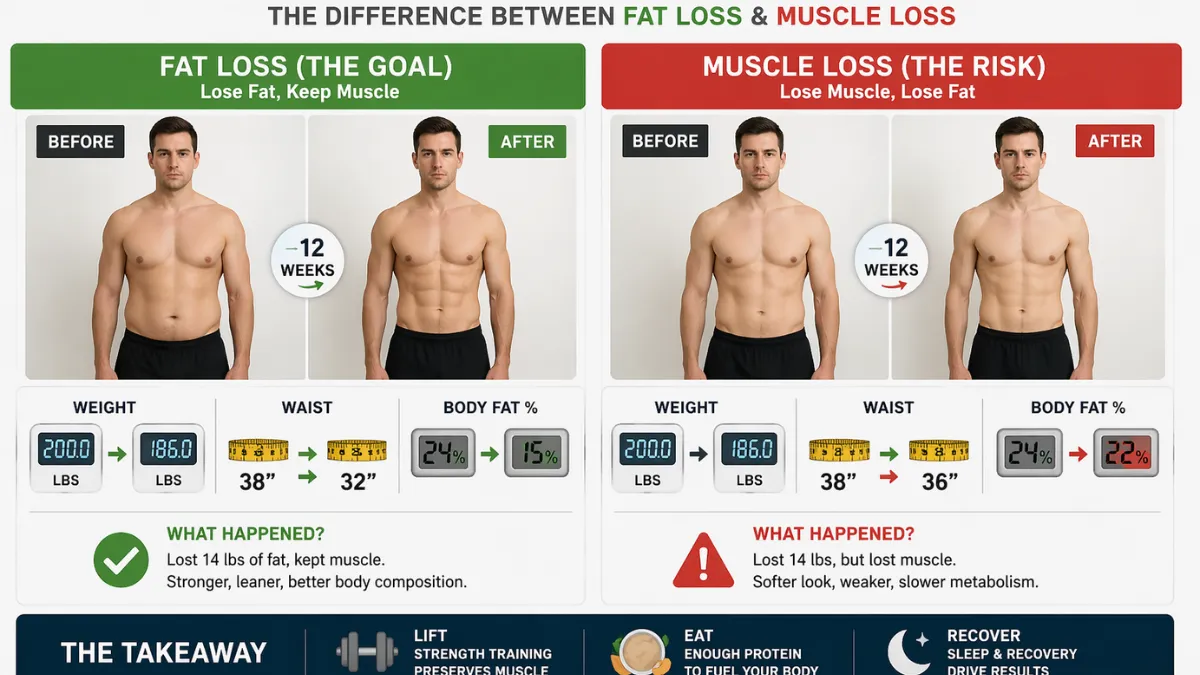
📌 Key Takeaways:
- A moderate 500–750 kcal daily deficit supports 0.5–1 kg (1–2 lb) weekly loss while minimizing muscle breakdown when combined with high protein and strength training.
- Target 1.6–2.4 g protein per kg body weight daily, spread across meals, plus 2–3 resistance sessions weekly to preserve or gain lean mass during deficits.
- Faster loss (>1% body weight/week long-term) increases muscle loss risk; prioritize sustainable pacing and monitor body composition for optimal results.
Introduction
Many adults pursuing weight loss unintentionally lose significant muscle mass, which slows metabolism, reduces strength, and complicates long-term maintenance. Clinical data indicate that up to 25% or more of total weight lost in calorie-restricted diets can come from lean tissue without protective strategies.
In 2026, with rising focus on body composition over scale weight, evidence-based approaches emphasize fat-specific loss. This matters for metabolic health, physical function, and preventing regain. Adults with overweight or obesity, active individuals, and those using medications like GLP-1 agonists benefit most from these methods. Readers gain practical, guideline-supported tools to create deficits that target fat while safeguarding muscle through nutrition, training, and habits. Expect realistic 4–8 kg fat loss over 8–12 weeks with improved energy and strength when applied consistently.
Understanding the Science of Muscle Preservation During Weight Loss
Weight loss requires a calorie deficit, but aggressive cuts elevate muscle protein breakdown. Systematic reviews show diet-only loss of 10 kg typically reduces fat-free mass by 2–3 kg. Higher protein intake and resistance exercise attenuate this substantially.
Key mechanisms: Adequate amino acids support muscle protein synthesis, while mechanical loading from training signals retention. Slower rates (0.5–1% body weight/week) favor fat oxidation over lean tissue catabolism. Very-low-calorie diets (<800–1,000 kcal) accelerate muscle loss and suit medical supervision only.
Practical Monitoring Tips:
- Track scale weight, waist circumference, and strength levels weekly.
- Use bioimpedance scales or DEXA for body composition when possible.
- Adjust deficit if strength drops or fatigue increases.
Creating a Safe Calorie Deficit for Faster Fat Loss
Aim for 500–750 kcal below maintenance for 0.5–1 kg weekly loss. This pace balances speed with muscle protection per CDC and obesity guidelines. Calculate maintenance via apps or formulas (e.g., 10–12 kcal/lb body weight for moderately active), then subtract.
For a 90 kg person: ~2,000–2,500 maintenance kcal → 1,500–2,000 kcal target. Reassess every 2–4 weeks as metabolism adapts.
Sample Daily Structure (~1,800 kcal for moderate activity):
- Prioritize whole foods for satiety and nutrients.
- Include fiber-rich vegetables and healthy fats.
Optimizing Protein Intake to Spare Muscle
Protein stands as the most evidence-supported nutrient for muscle retention. Meta-analyses confirm intakes of 1.6–2.4 g/kg body weight reduce lean mass loss significantly during deficits. For a 80 kg adult: 128–192 g/day. Spread evenly (20–40 g/meal) to maximize synthesis.
Macronutrient Distribution Example (1,800 kcal):
- Protein: 30–35% (135–160 g)
- Carbs: 40–45% (from whole sources)
- Fats: 25–30% (unsaturated focus)
High-Protein Meal Examples:
- Breakfast: 4 egg whites + 2 whole eggs, spinach, oats (40 g protein).
- Lunch: 150 g grilled chicken, quinoa, broccoli (45 g protein).
- Dinner: 150 g salmon or lean beef, sweet potato, salad (40 g protein).
- Snacks: Greek yogurt (200 g) or whey shake with fruit.
Resistance Training and Exercise Protocols
Resistance training provides the strongest stimulus for muscle retention. Combine with moderate cardio for calorie burn without excess catabolism.
Weekly Plan Recommendations:
- Resistance: 3–4 sessions, full-body or push-pull-legs, progressive overload (squats, deadlifts, presses, rows). 3–4 sets of 8–12 reps.
- Cardio: 2–3 sessions HIIT or steady-state (20–40 min), placed away from heavy lifts when possible.
- Daily steps: 8,000–12,000 for NEAT.
Evidence from randomized trials shows resistance training 2–3 times weekly prevents most muscle loss even in deficits.
Comparison Table: Exercise Approaches for Fat Loss
| Feature | Resistance Training Focus | Cardio-Only Approach | Combined (Optimal) |
|---|---|---|---|
| Weekly Frequency | 3–4 sessions | 4–5 sessions | 3 resistance + 2 cardio |
| Muscle Preservation | High | Low–Moderate | Highest |
| Fat Loss Rate | Moderate | Faster initial | Balanced & sustainable |
| Calories Burned | Moderate (post-burn) | High during session | Synergistic |
| Best For | Muscle retention | Quick scale drop | Body recomposition |
| Risks | Injury if form poor | Higher muscle loss | Overtraining if no rest |
Additional Strategies: Sleep, Timing, and Supplementation
Sleep 7–9 hours nightly; poor sleep elevates cortisol and impairs recovery. Time protein around workouts (pre/post). Creatine (3–5 g/day) aids performance and retention. Caffeine supports training intensity.
Avoid extreme intermittent fasting if it reduces total protein or training quality.
Risks and Who Should Be Cautious:
- Rapid loss risks gallstones, nutrient gaps, metabolic slowdown.
- Limit aggressive deficits if kidney issues (high protein caution), eating disorders, pregnancy, or elderly frailty.
- Consult providers before combining with weight-loss medications.
Popular Approaches Comparison
Diet Pattern Table:
| Pattern | Protein Level | Deficit Compatibility | Muscle Preservation | Sustainability |
|---|---|---|---|---|
| High-Protein Balanced | 1.6–2.4 g/kg | Excellent | High | High |
| Low-Carb/Keto | Variable | Good short-term | Moderate | Moderate |
| Very Low Calorie | Often inadequate | Poor | Low | Low |
Higher-protein flexible patterns outperform extremes long-term.
Conclusion
Losing weight fast without losing muscle demands a moderate calorie deficit, elevated protein (1.6–2.4 g/kg), consistent resistance training, and recovery priorities. These yield superior body composition, strength retention, and metabolic benefits over diet-alone approaches. Next steps: Calculate needs, plan 3–4 weekly lifts, hit protein targets daily, and track progress for 4 weeks before adjusting. Long-term, this builds habits for maintenance and healthspan. Sustainable pacing and professional guidance ensure safety and results. Prioritize consistency for lasting fat loss and muscle health.
FAQ — People Also Ask
Q: How fast can I lose weight without losing muscle? A: Safely 0.5–1 kg (1–2 lb) per week with high protein and strength training. Faster rates increase muscle loss risk.
Q: What protein intake preserves muscle in a deficit?
A: 1.6–2.4 g per kg body weight daily, spread across 3–5 meals, supported by meta-analyses for optimal retention.
Q: Is cardio bad for muscle during weight loss?
A: Moderate cardio helps; excessive volumes without resistance training can increase loss. Prioritize weights.
Q: Can I build muscle while losing fat?
A: Yes, especially beginners or with higher protein and training in moderate deficits (body recomposition).
Q: What if I plateau on scale weight?
A: Focus on measurements, strength gains, and photos. Reassess calories or add activity; muscle gain can mask fat loss.
References
- https://www.health.harvard.edu/exercise-and-fitness/trying-to-lose-weight-be-careful-not-to-lose-muscle https://pmc.ncbi.nlm.nih.gov/articles/PMC8978023/
- https://www.healthline.com/health/exercise-fitness/how-to-lose-fat-without-losing-muscle https://pmc.ncbi.nlm.nih.gov/articles/PMC5421125/
- https://pubmed.ncbi.nlm.nih.gov/39002131/
- https://www.cdc.gov/healthy-weight-growth/losing-weight/index.html https://pmc.ncbi.nlm.nih.gov/articles/PMC8308821/