
📌 Key Takeaways:
- Common beginner-friendly approaches like 12–16 hour fasts (e.g., 16/8) primarily aid weight loss through reduced eating windows and unintentional calorie restriction.
- Benefits for insulin sensitivity and body weight appear similar to continuous calorie restriction when total intake matches; muscle preservation requires adequate protein and resistance training.
- Intermittent fasting is not suitable for pregnant individuals, those with eating disorders, or certain medical conditions—consult a healthcare provider before starting.
Introduction
Intermittent fasting (IF) involves cycling between periods of eating and voluntary fasting rather than specifying particular foods. It has gained popularity for potential effects on weight management, metabolic health, and simplicity. However, evidence from systematic reviews shows outcomes largely stem from overall calorie reduction, not unique metabolic “magic.”
In 2026, with ongoing research into time-restricted eating, beginners need clear, realistic expectations. This guide targets adults new to IF seeking sustainable habits for energy, body composition, or metabolic improvements. Readers receive practical, guideline-supported steps: selecting a schedule, structuring meals, combining with exercise, and recognizing limitations. Applied consistently within a moderate calorie framework, IF can support adherence and modest fat loss while prioritizing safety and nutrient adequacy.
Common Intermittent Fasting Methods for Beginners
Start gradually to minimize side effects like hunger, irritability, or fatigue.
Recommended Beginner Progression:
- Begin with 12-hour fasts (e.g., finish dinner by 7 PM, eat breakfast at 7 AM).
- Progress to 14:10 or 16:8 as tolerated.
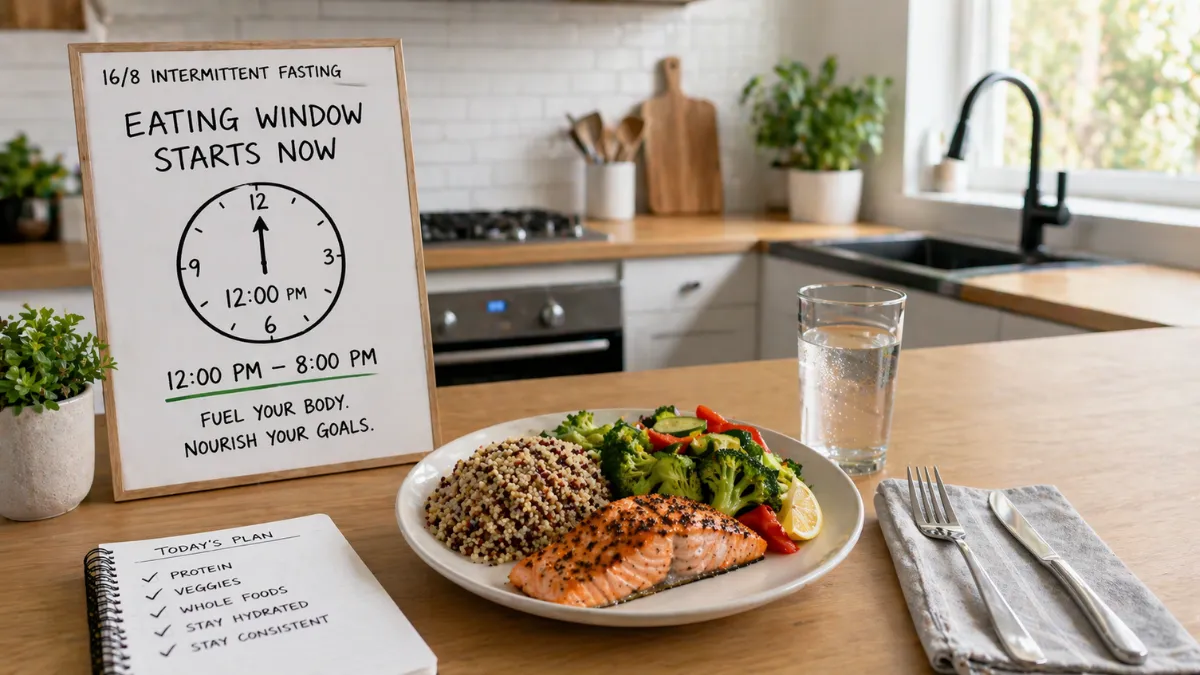
- Common sustainable option: 16/8 (16 hours fasting, 8-hour eating window, such as 12 PM–8 PM).
Other Approaches:
- 5:2: Normal eating 5 days; 500–600 kcal on 2 non-consecutive days.
- Avoid prolonged fasts (>24–36 hours) without medical supervision.
Sample 16/8 Schedule:
- 12 PM: First meal (balanced lunch).
- 3–4 PM: Snack or second meal.
- 7–8 PM: Final meal.
- Fast until noon next day (water, black coffee, tea allowed).
Nutrition and Meal Composition During Eating Windows
IF does not override calorie needs or food quality. Focus on nutrient-dense meals to prevent deficiencies and support satiety.
Macronutrient Guidance (example ~1,800 kcal day):
- Protein: 1.2–1.6+ g/kg body weight to preserve muscle.
- Carbohydrates and fats: Balanced from whole sources.
- Fiber: 30+ g/day from vegetables, fruits, legumes.
Practical High-Protein Meal Examples (16/8 Window):
- Lunch (12 PM): Grilled chicken (150 g), quinoa (60 g cooked), large vegetable salad with olive oil (~45 g protein).
- Afternoon Meal: Greek yogurt (200 g) with berries, almonds, and spinach smoothie.
- Dinner (by 8 PM): Baked salmon (120 g), sweet potato, broccoli (~40 g protein).
Stay hydrated during fasting periods and consider electrolytes if fasting longer.
Combining Intermittent Fasting with Exercise
Pair IF with movement for better body composition.
Recommendations:
- Resistance training 2–3 times weekly during or after eating windows to support muscle retention.
- Moderate aerobic activity most days.
- Adjust training if fasted workouts cause excessive fatigue.
Comparison Table: Fasting Schedules for Beginners
| Schedule | Fasting Window | Eating Window | Best For | Difficulty (Beginner) | Potential Risks |
|---|---|---|---|---|---|
| 12-Hour | 12 hours | 12 hours | Easiest entry | Very Low | Minimal |
| 16:8 | 16 hours | 8 hours | Weight management | Moderate | Hunger, adherence issues |
| 5:2 | 2 restricted days | Normal 5 days | Flexible calorie control | Moderate | Low energy on restricted days |
| 18:6 or Longer | 18+ hours | 6 hours | Experienced users | High | Muscle loss, nutrient gaps |
Potential Benefits and Supporting Evidence
When IF creates a calorie deficit, it supports modest weight loss (similar to other diets) and may improve insulin sensitivity and cardiometabolic markers in some individuals. Long-term superiority over continuous restriction remains limited in reviews. Benefits depend on overall diet quality and consistency.
Key Lifestyle Factors:
- Prioritize sleep (7–9 hours).
- Manage stress.
- Track progress with measurements, energy levels, and strength—not just scale weight.
Risks, Side Effects, and Contraindications
Common initial side effects include hunger, fatigue, irritability, and headaches, which often improve with adaptation.
Who Should Avoid or Use Caution:
- Pregnant or breastfeeding individuals.
- History of eating disorders.
- People with diabetes or on blood sugar medications (hypoglycemia risk).
- Underweight, adolescents, or frail older adults.
- Certain medications requiring food intake.
Rapid or extreme fasting increases risks of nutrient deficiencies, muscle loss, or disordered eating patterns. Consult a healthcare provider for personalization.
Practical Tips for Long-Term Success
- Build gradually and listen to your body.
- Focus on whole foods during eating windows.
- Combine with resistance training and protein emphasis.
- Reassess every 4–8 weeks; include maintenance periods.
Risks of Over-Restriction: Excessive focus on fasting windows can lead to burnout or inadequate intake. Sustainability matters more than perfection.
Conclusion
Intermittent fasting offers a flexible framework for some adults to manage calorie intake and support metabolic health, particularly through beginner-friendly schedules like 16/8. Benefits largely align with those of balanced calorie restriction when paired with nutrient-dense meals, movement, and recovery. Next steps: Choose a 12–14 hour starting window, plan balanced meals, track how you feel for two weeks, and adjust gradually. Long-term success depends on consistency, overall diet quality, and individual response rather than fasting duration alone. View IF as one tool among evidence-based habits for sustainable health improvements. Always consult a registered dietitian or physician before beginning, especially with medical conditions or medications.
FAQ — People Also Ask
Q: What is the best intermittent fasting schedule for beginners?
A: Start with 12–14 hour fasts and progress to 16:8. This allows most fasting during sleep and supports sustainable habits.
Q: Does intermittent fasting cause muscle loss?
A: Risk increases with severe deficits or inadequate protein. Prioritize 1.2–1.6+ g/kg protein and resistance training to minimize loss.
Q: How much weight can beginners lose with IF?
A: Modest losses (similar to other calorie-restricted approaches) occur mainly through reduced intake; individual results vary.
Q: Is intermittent fasting safe for everyone?
A: No. Avoid if pregnant, breastfeeding, history of eating disorders, or certain medical conditions—consult a provider.
Q: Can you drink coffee or water during fasting?
A: Yes. Zero-calorie beverages like water, black coffee, and plain tea are generally allowed and encouraged.
References
- https://www.hopkinsmedicine.org/health/expert-qa/intermittent-fasting-what-is-it-and-how-does-it-work https://www.cochranelibrary.com/cdsr/doi/10.1002/14651858.CD015610.pub2 https://pmc.ncbi.nlm.nih.gov/articles/PMC9946909/
- https://sph.umich.edu/pursuit/2019posts/beginners-guide-to-intermittent-fasting.html https://www.bmj.com/content/389/bmj-2024-082007
- https://www.medicalnewstoday.com/articles/322293
- https://pmc.ncbi.nlm.nih.gov/articles/PMC7021351/