
📌 Key Takeaways:
- A calorie deficit occurs when energy intake is lower than expenditure, leading to 0.5–1 kg (1–2 lb) weekly loss with a 500–750 kcal daily reduction.
- Moderate deficits combined with 1.6–2.2 g/kg protein and resistance training preserve muscle and minimize metabolic slowdown.
- Extreme deficits (<1,200 kcal/day for most) increase risks of muscle loss, nutrient gaps, and regain—prioritize gradual, sustainable approaches.
Introduction
Weight loss fundamentally requires consuming fewer calories than the body burns, yet confusion around “deficits,” calculations, and safety persists. A calorie deficit simply means energy intake falls below total daily energy expenditure (TDEE), prompting the body to use stored fat for fuel. Clinical guidelines from major health authorities consistently endorse moderate deficits for effective, safe results.
In 2026, with widespread tracking tools and medications, understanding deficits prevents common pitfalls like plateaus or excessive muscle loss. This guide targets beginners and those seeking clarity on sustainable fat loss. Readers receive straightforward explanations, calculation methods, practical meal frameworks, and protective strategies for long-term health. Expect realistic progress: 5–10% body weight reduction over months with improved energy and metabolic markers when applied consistently.
What a Calorie Deficit Actually Is
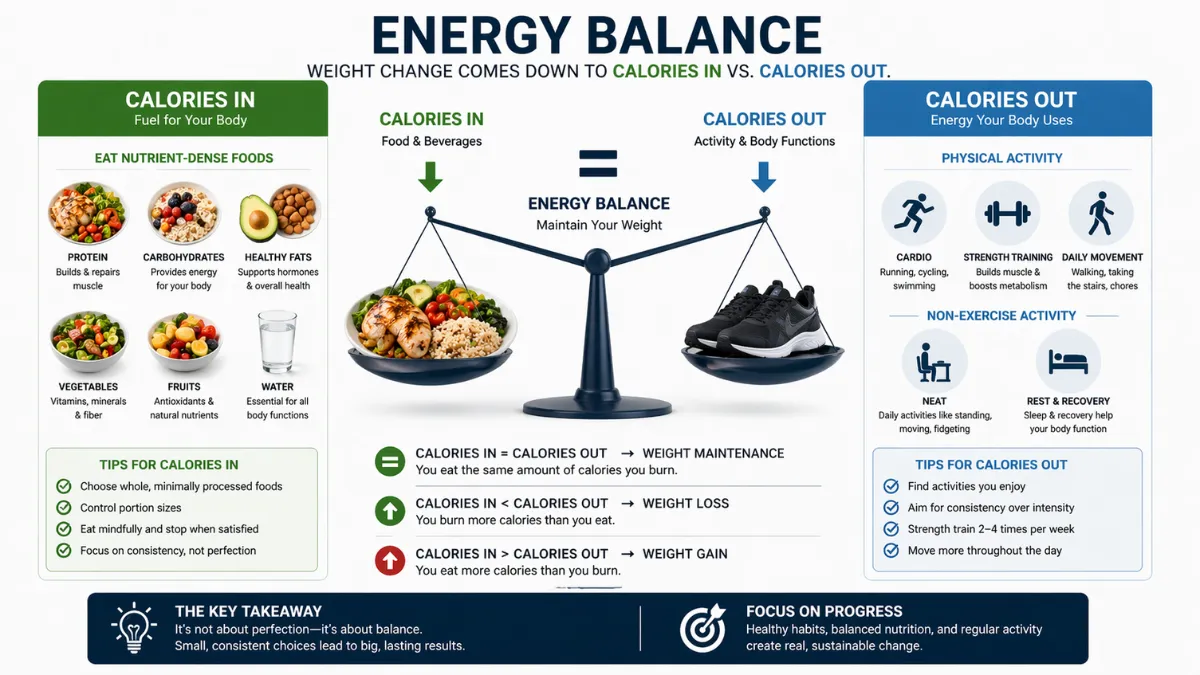
Energy balance governs body weight: calories in versus calories out. TDEE includes basal metabolic rate (BMR), digestion, daily movement, and exercise. A deficit of 500–750 kcal/day typically produces 0.5–1 kg weekly loss because 1 kg body fat ≈ 7,700 kcal.
Larger deficits accelerate initial loss (mostly water/glycogen) but raise risks. Moderate approaches yield better fat-specific results and adherence.
How Calories Are Expended (Approximate Breakdown):
- BMR (60–75%): Basic functions at rest.
- Thermic effect of food (10%): Digestion.
- Physical activity (15–30%): Exercise + non-exercise activity thermogenesis (NEAT).
How to Calculate Your Calorie Deficit Safely
Estimate TDEE then subtract. Use validated tools or formulas.
Step-by-Step Process:
- Calculate BMR (Mifflin-St Jeor equation example):
- Men: BMR = (10 × weight kg) + (6.25 × height cm) – (5 × age) + 5
- Women: BMR = (10 × weight kg) + (6.25 × height cm) – (5 × age) – 161
- Multiply by activity factor: Sedentary (1.2), Lightly active (1.375), Moderately active (1.55).
- Subtract 500–750 kcal for deficit. Minimum: Generally 1,200 kcal (women) or 1,500 kcal (men).
Example: 75 kg moderately active woman, age 35, 165 cm → TDEE ≈ 2,200 kcal → Deficit target: 1,500–1,700 kcal/day. Reassess every 4 weeks.
Practical Tracking Tips:
- Use apps with food scales for accuracy.
- Log 1–2 weeks to establish baseline.
- Adjust based on weekly weight trends (0.5–1 kg ideal).
Optimizing Nutrition in a Calorie Deficit
Food quality and macronutrients matter more than numbers alone for satiety, muscle retention, and health.
Macronutrient Targets (1,600–1,800 kcal example):
- Protein: 1.6–2.2 g/kg (120–165 g for 75 kg person) — preserves muscle.
- Carbohydrates: 45–55% from whole sources.
- Fats: 25–30% emphasizing unsaturated.
Sample Daily Meal Plan (~1,650 kcal, 140 g protein):
- Breakfast: Greek yogurt (200 g) + berries (150 g) + 20 g almonds (~35 g protein, 400 kcal).
- Lunch: Grilled chicken breast (150 g) + quinoa (60 g cooked) + large vegetable salad with olive oil (~45 g protein, 500 kcal).
- Dinner: Baked salmon (120 g) + sweet potato (150 g) + broccoli (200 g) (~40 g protein, 500 kcal).
- Snack: Cottage cheese (150 g) or protein shake with apple (~20 g protein, 250 kcal).
Exercise and Muscle Preservation Strategies
Activity increases TDEE and protects lean mass.
Key Recommendations:
- Resistance training: 3–4 sessions/week (squats, rows, presses) with progressive overload.
- Aerobic: 150+ minutes moderate activity.
- NEAT: Increase daily steps to 8,000–12,000.
Comparison Table: Deficit Approaches
| Approach | Weekly Loss Rate | Muscle Preservation | Sustainability | Risks |
|---|---|---|---|---|
| Moderate (500–750 kcal) | 0.5–1 kg | High with protein + training | High | Low |
| Aggressive (>1,000 kcal) | >1 kg | Low | Low | Muscle loss, fatigue, rebound |
| Very Low Calorie (<800) | Rapid | Very Low | Very Low | Gallstones, nutrient gaps |
Evidence confirms higher protein and resistance exercise significantly reduce lean mass loss during deficits.
Common Mistakes and How to Avoid Them
- Inaccurate tracking (underestimating by 20–30%).
- Ignoring adaptation — reassess TDEE regularly.
- Extreme restriction leading to burnout.
- Neglecting sleep/stress (both affect hunger hormones).
Risks and Contraindications: Rapid or severe deficits increase muscle loss, metabolic slowdown, gallstones, and nutrient deficiencies. Avoid if pregnant, underweight, history of eating disorders, or certain medical conditions. Consult providers, especially with medications.
Conclusion
A calorie deficit is the proven mechanism for weight and fat loss, achieved most effectively through moderate reductions (500–750 kcal/day) paired with nutrient-dense eating, adequate protein, and strength training. This approach delivers sustainable results with minimal muscle loss and health risks. Next steps: Estimate your TDEE using an online calculator or formula, track intake accurately for one week, plan high-protein meals, and schedule resistance sessions. Monitor weight, energy, and measurements over 4 weeks before adjusting. Long-term, consistent moderate deficits combined with healthy habits support better body composition, metabolic health, and quality of life. Work with a registered dietitian for personalized plans.
FAQ — People Also Ask
Q: How big should my calorie deficit be?
A: 500–750 kcal daily supports safe 0.5–1 kg weekly loss. Larger deficits increase risks.
Q: Will a calorie deficit slow my metabolism?
A: Moderate deficits cause minimal adaptation; high protein and resistance training help preserve metabolic rate.
Q: Can I lose weight without tracking calories?
A: Yes, by focusing on whole foods and portions, but tracking accelerates understanding and results.
Q: How do I avoid losing muscle in a deficit?
A: Consume 1.6–2.2 g protein per kg body weight and perform resistance training 3+ times weekly.
Q: Is a 1,200 calorie diet safe?
A: For many smaller or sedentary women as a minimum; smaller individuals or men may need more. Personalize and monitor.
References
- https://www.cdc.gov/healthy-weight-growth/losing-weight/index.html https://newsinhealth.nih.gov/2022/12/healthy-weight-control https://www.medicalnewstoday.com/articles/calorie-deficit
- https://pmc.ncbi.nlm.nih.gov/articles/PMC5421125/
- https://www.mayoclinic.org/healthy-lifestyle/weight-loss/in-depth/calorie-calculator/itt-20402304 https://www.cdc.gov/healthy-weight-growth/about/tips-for-balancing-food-activity.html