📌 Key Takeaways:
- Protein-rich foods increase the thermic effect of food (15–30% of calories burned during digestion), supporting modest elevations in energy expenditure and superior satiety compared to fats or refined carbs.
- Green tea catechins with caffeine and capsaicin from chili peppers produce small, temporary increases in fat oxidation (often <50–100 kcal/day extra), with minimal long-term weight impact when isolated.
- Sustainable fat loss stems from consistent calorie balance, muscle preservation, and nutrient-dense patterns rather than any specific “fat-burning” food; exaggerated claims lack robust support.
Introduction
Claims of specific foods that actively “burn fat” or dramatically accelerate metabolism proliferate in popular media and supplement marketing. These often highlight isolated compounds like catechins, capsaicin, or caffeine with promises of effortless body composition change. In reality, systematic reviews and meta-analyses demonstrate that effects remain modest at best, with no food overriding the fundamental requirement of energy balance for fat loss.
This matters in 2026 as adults continue seeking sustainable solutions amid rising metabolic concerns. While certain whole foods modestly enhance thermogenesis, fat oxidation, or satiety, their benefits emerge within broader dietary patterns emphasizing protein, fiber, and volume rather than isolated consumption. Dramatic or rapid results typically require overall calorie control, resistance training, and consistent habits.
This article targets individuals evaluating popular claims for realistic weight management, metabolic health, or fat loss. It provides evidence-aligned guidance on mechanisms, practical integration via the plate method, and strategies that deliver measurable outcomes without hype. Readers gain frameworks supporting gradual progress (0.5–1 kg weekly) while preserving lean mass, energy levels, and long-term adherence.
Understanding Thermogenesis and Fat Oxidation
The thermic effect of food (TEF) represents energy expended digesting, absorbing, and metabolizing nutrients. Protein elicits the highest TEF (15–30%), followed by carbohydrates (5–10%) and fats (0–3%). This contributes modestly to daily expenditure but supports satiety and muscle preservation during deficits.
Fat oxidation refers to the body’s use of stored or dietary fat for fuel, influenced temporarily by compounds like caffeine, catechins, and capsaicin. These may increase expenditure or shift substrate use by small margins, yet adaptive responses and overall intake determine net fat loss. No food creates a significant, sustained deficit in isolation.
Individual variability depends on baseline diet, activity, body composition, and genetics. Modest effects accumulate meaningfully when paired with structured nutrition and movement.
Protein-Rich Foods: Strongest Evidence for Support
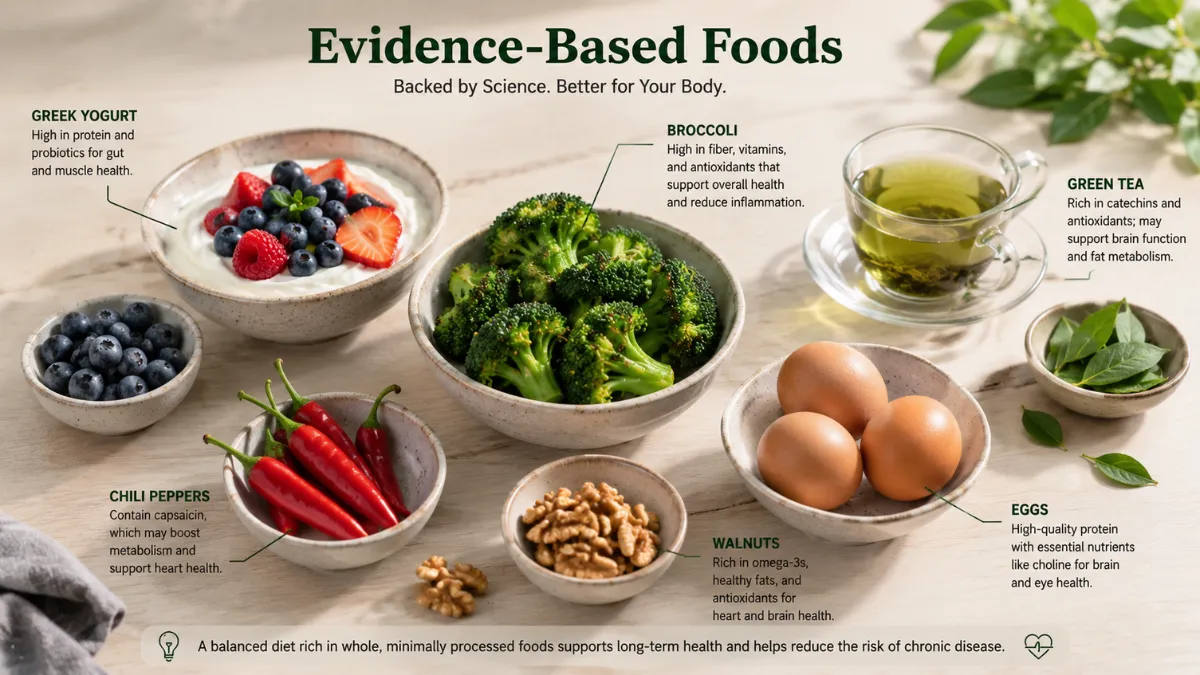
Lean proteins and high-protein foods consistently rank highest for practical metabolic support through elevated TEF, satiety, and muscle maintenance. Sources such as poultry, fish, eggs, Greek yogurt, legumes, and tofu enhance post-meal expenditure and reduce subsequent intake.
Practical targets: 1.6–2.2 g protein per kg body weight, distributed as 20–40 g per meal (1–2 palms). This pattern aids preservation of resting metabolic rate during weight loss.
Real-life examples:
- Breakfast: Greek yogurt with berries and chia
- Lunch: Grilled chicken or tofu with large vegetable salad and beans
- Dinner: Baked salmon or lentils with broccoli and moderate whole grains
These choices naturally align with balanced macronutrients (~25–35% protein) while increasing meal satisfaction.
Green Tea, Coffee, and Capsaicin: Modest Thermogenic Effects
Unsweetened green tea provides catechins (EGCG) and caffeine linked to small increases in fat oxidation and energy expenditure. Meta-analyses show modest weight reduction (~1–1.25 kg) in some contexts, particularly alongside calorie control. Black coffee offers similar caffeine-driven benefits for alertness and minor thermogenesis.
Capsaicin in chili peppers may temporarily elevate expenditure and fat burning, with effects more pronounced in those unaccustomed to spice. Daily additions yield limited cumulative impact without broader dietary changes.
Integration tips:
- Consume 2–4 cups unsweetened green tea or black coffee daily
- Add chili, ginger, or cayenne to meals for flavor and minor effects
- Time caffeinated beverages earlier to avoid sleep disruption
High-Volume, Fiber-Rich Foods and Other Claims
Non-starchy vegetables, berries, and legumes increase meal volume and fiber (target 25–38 g daily), promoting satiety through gastric distension and slower digestion rather than direct fat burning. These support lower energy density eating without specific thermogenic magic.
Many popular claims—such as grapefruit, celery, or certain spices—lack robust evidence for meaningful independent effects. Systematic reviews of supplements and functional foods confirm small or inconsistent benefits at best, with diet and exercise outperforming isolated additions.
Bullet list of evidence-based priorities:
- Prioritize protein at every meal for TEF and satiety
- Include non-starchy vegetables for volume and fiber
- Use green tea/coffee and spices as supportive elements
- Focus on whole-food patterns over single items
- Combine with resistance training to preserve muscle
Comparison Table: Claimed vs. Evidence-Based Approaches
| Food / Claim | Proposed Mechanism | Realistic Effect | Evidence Level | Practical Role | Limitations / Risks |
|---|---|---|---|---|---|
| High-Protein Foods | High TEF, satiety, muscle support | Strong support for deficit & maintenance | Strong | Core of every meal (1–2 palms) | Excess in kidney disease |
| Green Tea / Coffee | Catechins + caffeine | Modest fat oxidation (~1 kg extra) | Moderate | 2–4 cups unsweetened daily | Caffeine sensitivity, sleep impact |
| Chili Peppers (Capsaicin) | Temporary thermogenesis | Small daily burn increase | Moderate (short-term) | Flavor addition to meals | GI irritation in excess |
| Grapefruit / Celery | “Negative calories” myth | Negligible independent effect | Weak | Part of vegetable volume | No unique fat-burning advantage |
| Fiber-Rich Vegetables | Volume, delayed gastric emptying | Enhanced satiety, lower energy density | Strong | Half plate non-starchy | Gradual increase to minimize bloating |
| “Fat Burner” Supplements | Various thermogenic claims | Small or no consistent benefit | Weak / Inconsistent | Generally not recommended | Safety concerns, cost |
This table clarifies relative contributions and prioritizes sustainable choices.
Practical Strategies and Integration with Plate Method
Apply the plate method consistently: half non-starchy vegetables (volume and fiber), quarter lean protein (TEF and satiety), quarter quality carbohydrates. Add healthy fats sparingly and supportive beverages like green tea.
Daily structure examples:
- Start with water or black coffee
- Build meals around protein and vegetables
- Use spices and herbs liberally
- Include movement to amplify effects
Bullet list of supporting habits:
- Resistance training 2–4 times weekly to maintain muscle
- Adequate sleep and stress management
- Hydration (2.5–3.5+ liters daily)
- Moderate calorie control rather than extreme restriction
- Track progress via energy, measurements, and strength
Risks, Contraindications, and Long-Term Perspective
Over-reliance on single foods or supplements risks nutrient imbalance, gastrointestinal issues, or neglect of overall patterns. Caffeine or spice sensitivity requires moderation. Those with medical conditions (e.g., reflux, kidney issues, or thyroid disorders) should consult professionals. Pregnant individuals or those with eating disorder history need tailored guidance.
Sustainable fat loss avoids yo-yo cycles that exacerbate metabolic adaptation. Focus on consistency across weeks and months.
Conclusion
No foods magically burn fat in clinically meaningful amounts independent of energy balance. Protein-rich options, green tea, coffee, capsaicin, and high-volume fiber foods provide modest, supportive effects on thermogenesis, oxidation, and satiety when integrated into balanced patterns. The plate method, adequate protein, resistance training, and calorie awareness deliver reliable results.
Next steps: Audit current meals for protein and vegetable distribution this week, then incorporate green tea or chili where suitable. Build habits gradually alongside activity. Over time, these evidence-based practices support fat loss, metabolic health, and adherence without depending on hype.
Practical takeaway: Emphasize whole-food volume, protein, and consistent habits over searching for miracle fat burners. This approach yields sustainable body composition improvements grounded in physiology.
FAQ — People Also Ask
Q: Do any foods actually burn fat while you sleep or rest? A: No. Modest increases in fat oxidation from protein, green tea, or capsaicin occur but do not create meaningful deficits without overall calorie control.
Q: Is green tea one of the best fat-burning drinks? A: It offers small benefits via catechins and caffeine. Effects remain modest and work best alongside balanced intake and activity.
Q: Can spicy foods significantly boost metabolism? A: Capsaicin provides temporary minor increases in expenditure. Benefits are small and more noticeable in non-habitual users.
Q: What about supplements claiming to be fat burners? A: Most show limited or inconsistent effects compared to diet and exercise. Safety and long-term data often remain weak.
Q: How important is protein compared to other “fat-burning” foods? A: Protein ranks highest due to strong effects on satiety, TEF, and muscle preservation—core drivers of sustainable results.
References
- https://ods.od.nih.gov/factsheets/WeightLoss-HealthProfessional/
- https://pmc.ncbi.nlm.nih.gov/articles/PMC9099655/
- https://www.sciencedirect.com/science/article/pii/S1043661823003006
- https://nutritionsource.hsph.harvard.edu/
- https://www.mayoclinic.org/healthy-lifestyle/weight-loss/in-depth/metabolism/art-20046508
- https://pubmed.ncbi.nlm.nih.gov/33427571/
- https://www.healthline.com/nutrition/metabolism-boosting-foods