📌 Key Takeaways:
- Chronic elevation of cortisol from ongoing stress promotes visceral fat accumulation by increasing appetite for energy-dense foods, inducing insulin resistance, and favoring central fat storage via higher glucocorticoid receptor density in abdominal adipocytes.
- Visceral fat is metabolically active and linked to higher risks of insulin resistance, type 2 diabetes, and cardiovascular disease; however, cortisol is one contributor among diet, activity, genetics, and sleep.
- Evidence-supported approaches—stress reduction techniques, 7–9 hours of sleep, moderate exercise, and balanced high-protein, high-fiber eating—help regulate cortisol and support reductions in central adiposity without extreme restriction.
Introduction
Chronic stress has become pervasive in modern lifestyles, with measurable effects on body composition, particularly the accumulation of fat around the midsection. Cortisol, the primary glucocorticoid hormone released by the adrenal glands in response to stress, plays a central role in the body’s fight-or-flight response but contributes to visceral fat storage when levels remain elevated over time.
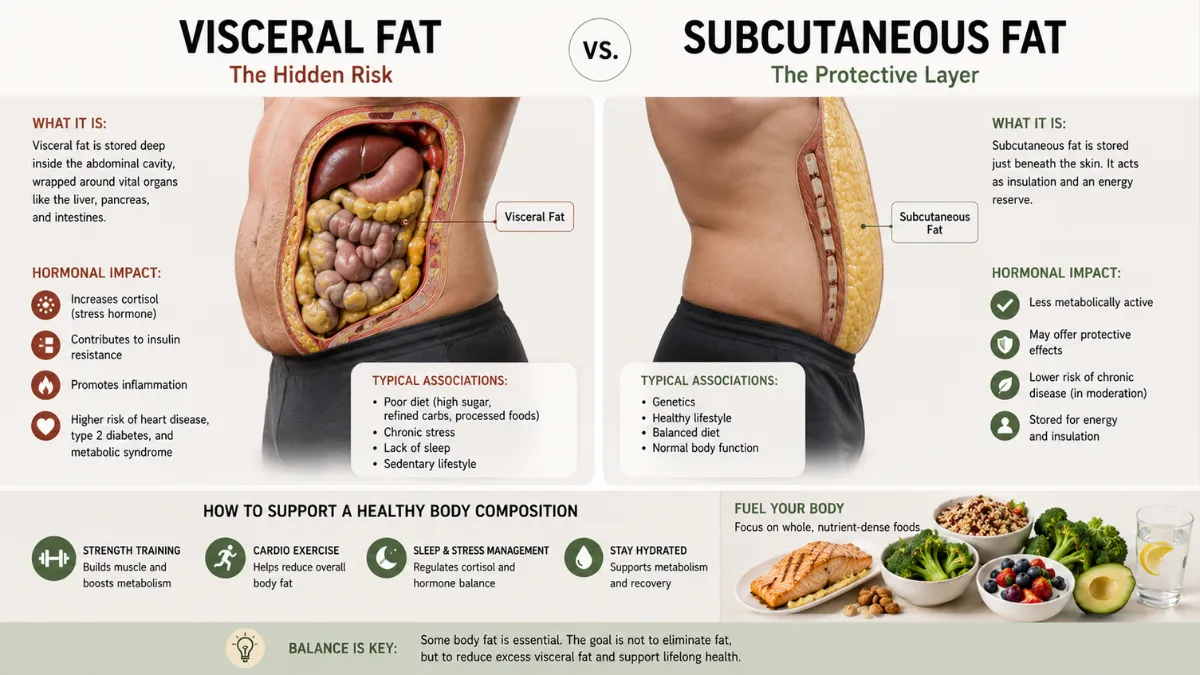
This association matters in 2026 as rates of central obesity and related metabolic conditions continue to rise. While acute cortisol surges mobilize energy effectively, prolonged exposure increases appetite (especially for palatable, high-sugar, high-fat foods), promotes insulin resistance, and redistributes fat toward the abdomen. Visceral fat, which surrounds internal organs, carries greater health risks than subcutaneous fat due to its inflammatory and metabolic activity.
This article targets adults noticing stubborn abdominal weight gain despite efforts at diet and exercise, or those managing high-stress lifestyles. It delivers practical, evidence-aligned guidance on cortisol’s mechanisms and modifiable factors. Readers gain frameworks for assessment, the plate method for meal structure, stress-reduction habits, and nutrition strategies that support hormone balance, satiety, and sustainable fat loss. These approaches emphasize whole-food patterns and lifestyle integration rather than quick fixes or unproven supplements, aligning with guidelines that prioritize long-term metabolic health.
Cortisol’s Role in Fat Distribution and Storage
Cortisol influences adipose tissue through glucocorticoid receptors, which are more densely expressed in visceral fat depots than in peripheral areas. This sensitivity promotes adipogenesis (new fat cell formation) and lipid storage in the abdomen, particularly when combined with insulin. Chronic elevation upregulates 11β-HSD1 enzyme activity in adipose tissue, amplifying local cortisol effects and favoring central over peripheral fat.
In conditions like Cushing’s syndrome, marked hypercortisolism produces classic central obesity. In everyday chronic stress, milder but sustained increases contribute similarly, though individual responses vary based on genetics, coping mechanisms, and concurrent factors like sleep and diet. Not all studies show strong direct correlations between circulating cortisol and waist circumference in general populations, highlighting that cortisol interacts with other drivers.
Key physiological effects include:
- Increased appetite and preference for comfort foods
- Promotion of gluconeogenesis and insulin resistance
- Reduced subcutaneous fat with relative preservation or increase in visceral stores
Mechanisms Linking Chronic Stress, Cortisol, and Belly Fat
Elevated cortisol stimulates hunger via effects on the brain’s reward centers and neuropeptides, often leading to higher consumption of energy-dense foods. It also impairs insulin signaling, raising circulating insulin and further driving fat storage. Visceral adipocytes are particularly responsive, creating a feedback loop that exacerbates central adiposity.
Sleep restriction and poor sleep quality amplify cortisol dysregulation, increasing evening levels and next-day appetite. Sedentary behavior and over-exercise without recovery can sustain higher levels, while moderate activity helps normalize the HPA axis.
Individual variability is significant. Some people exhibit heightened cortisol reactivity to stressors, predisposing them to greater abdominal fat gains. Psychological factors, such as poor coping skills or chronic perceived stress, modulate this response.
Practical Assessment and When to Seek Help
Simple indicators of potential cortisol involvement include midsection weight gain accompanied by fatigue, cravings, sleep disturbances, or mood changes despite consistent habits. Waist circumference (>102 cm men, >88 cm women) signals elevated visceral fat risk. However, self-diagnosis is unreliable; persistent symptoms warrant evaluation by a physician to rule out underlying conditions like Cushing’s or thyroid issues.
Home tracking of stress, sleep, and eating patterns provides useful insights without lab testing for most people.
Evidence-Based Strategies to Manage Cortisol and Reduce Belly Fat
Stress Reduction Techniques: Mindfulness, meditation, yoga, and deep breathing activate the parasympathetic system and lower cortisol. Consistent practice (10–20 minutes daily) shows benefits for perceived stress and abdominal fat.
Sleep Optimization: Prioritize 7–9 hours of quality sleep with consistent schedules. Poor sleep elevates cortisol and disrupts appetite hormones, worsening central fat storage.
Physical Activity: Moderate-intensity exercise (brisk walking, swimming, cycling) for 150+ minutes weekly reduces cortisol over time. Include resistance training 2–3 times per week to preserve muscle and support metabolic rate. Avoid chronic high-intensity sessions without recovery.
Nutrition Framework: Use the plate method: half non-starchy vegetables (fiber for satiety and blood sugar stability), quarter lean protein (1–2 palms per meal for muscle support and thermic effect), quarter quality carbohydrates. Emphasize whole foods, omega-3 sources, and adequate hydration. Limit ultra-processed items and added sugars that exacerbate cravings.
Comparison Table: Lifestyle Factors Influencing Cortisol and Belly Fat
| Factor | Effect on Cortisol & Fat | Evidence-Based Recommendation | Expected Benefit | Considerations |
|---|---|---|---|---|
| Chronic Stress | Sustained elevation, visceral storage | Mindfulness/yoga 10–20 min daily | Reduced reactivity, lower intake | Combine with social support |
| Sleep Duration/Quality | Short sleep raises evening cortisol | 7–9 hours consistent schedule | Better hormone balance, less hunger | Address apnea if suspected |
| Exercise Type/Intensity | Overtraining sustains; moderate lowers | 150 min moderate + resistance 2–3x/week | Improved insulin sensitivity, muscle | Include rest days |
| Dietary Pattern | High sugar/processed worsens; balanced stabilizes | Plate method, high fiber/protein | Satiety, stable glucose | Gradual changes for adherence |
| Alcohol & Caffeine | Can elevate if excessive | Limit alcohol; moderate caffeine timing | Lower overall load | Individual tolerance varies |
This table summarizes complementary actions for practical results.
Additional Habits:
- Eat regular balanced meals to avoid blood sugar crashes that heighten stress responses
- Include magnesium-rich foods (leafy greens, nuts, seeds) and omega-3s (fatty fish)
- Build social connections and enjoyable activities for natural stress buffering
Risks, Limitations, and Professional Considerations
Supplements marketed as “cortisol blockers” (e.g., ashwagandha in some contexts) lack strong consistent evidence for meaningful fat loss in healthy individuals and are not substitutes for lifestyle change. Extreme calorie restriction can paradoxically raise cortisol.
Risks and contraindications: Very high cortisol may indicate medical disorders requiring diagnosis. Those with adrenal conditions, on corticosteroids, or with eating disorder history need professional guidance. Pregnant individuals, athletes, and older adults should tailor approaches. Always consult a registered dietitian or physician for personalized medical nutrition therapy when symptoms persist.
Conclusion
Cortisol contributes to belly fat accumulation under chronic stress through appetite stimulation, insulin resistance, and preferential visceral storage, but it operates alongside diet quality, activity levels, sleep, and genetics. Addressing the root drivers—stress perception, recovery, and daily habits—offers the most reliable path to reduction and improved metabolic health.
Next steps: Implement the plate method for meals this week while adding one stress-reduction practice (e.g., daily breathing or walking) and prioritizing sleep consistency. Track waist measurements, energy, and hunger rather than daily weight. These integrated changes compound over months, supporting not only reduced central fat but better overall resilience, mood, and disease risk profile.
Practical takeaway: Manage cortisol through sustainable lifestyle foundations rather than isolated fixes. Balanced nutrition, movement, and recovery create conditions for healthier fat distribution and long-term well-being.
FAQ — People Also Ask
Q: Does high cortisol always cause belly fat? A: It contributes by promoting visceral storage and appetite, but diet, inactivity, genetics, and sleep play major roles. Not everyone with stress develops prominent central fat.
Q: Can I spot-reduce cortisol belly fat? A: No. Overall fat loss through calorie balance, stress management, and activity reduces visceral fat; targeted reduction is not supported by evidence.
Q: What foods lower cortisol levels? A: No single food dramatically lowers it. Emphasize whole-food patterns rich in fiber, protein, omega-3s, and magnesium while limiting excess sugar and processed items for stability.
Q: How quickly can lifestyle changes lower cortisol and belly fat? A: Improvements in stress markers and habits appear within weeks; noticeable body composition changes typically require 8–12+ weeks of consistency.
Q: Are cortisol-lowering supplements effective for fat loss? A: Evidence is limited and inconsistent for most. Focus on proven foundations—sleep, movement, nutrition, and stress practices—before considering supplements under professional advice.
References
- https://pmc.ncbi.nlm.nih.gov/articles/PMC3107005/
- https://pmc.ncbi.nlm.nih.gov/articles/PMC3602916/
- https://www.ncbi.nlm.nih.gov/books/NBK538239/
- https://pmc.ncbi.nlm.nih.gov/articles/PMC5958156/
- https://nutritionsource.hsph.harvard.edu/
- https://www.mayoclinic.org/healthy-lifestyle/stress-management/in-depth/stress/art-20046037 https://pmc.ncbi.nlm.nih.gov/articles/PMC3184496/