
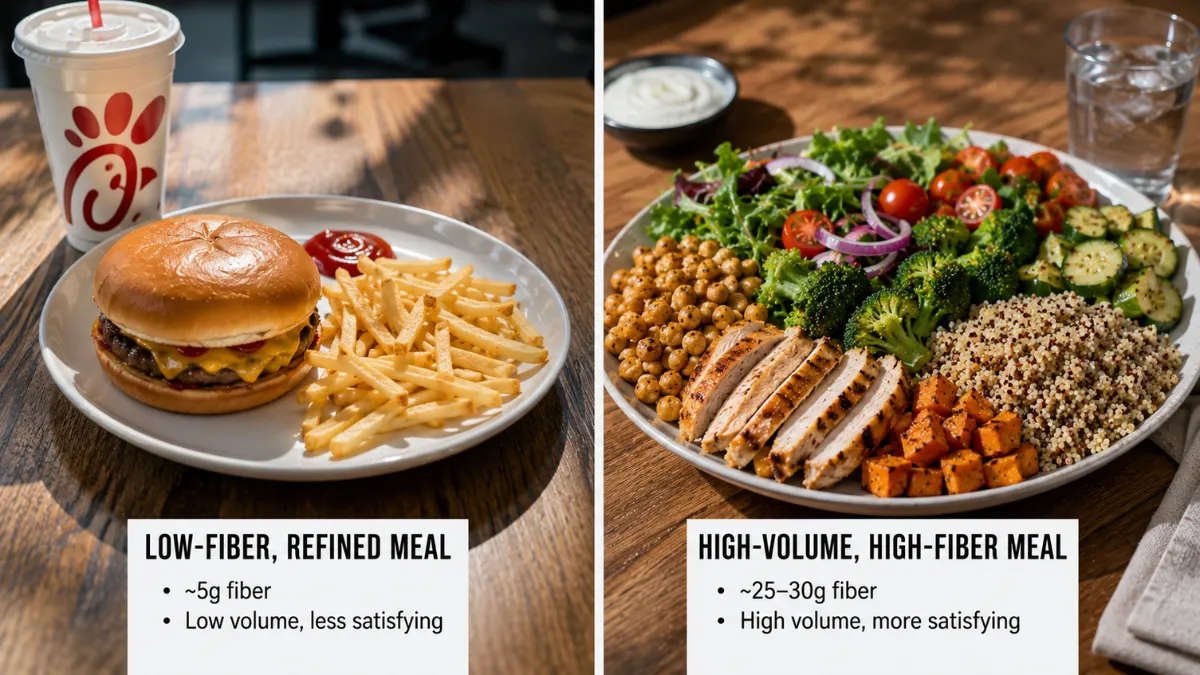
📌 Key Takeaways:
- Adults consuming 25–38 g fiber daily achieve greater satiety and modest weight reduction (typically 1–2 kg over months) through lower energy density and prolonged fullness.
- Viscous soluble fibers slow gastric emptying and support gut hormone signaling, while total fiber intake reduces ad libitum calorie consumption.
- Combine with the plate method and gradual increases to reach targets safely, prioritizing whole foods for sustained adherence and minimal gastrointestinal side effects.
Introduction
Many adults attempting weight loss focus primarily on calorie restriction or macronutrient manipulation, yet overlook dietary fiber as a foundational tool for creating deficits without persistent hunger. Average intakes remain well below recommendations, at around 15–17 g daily in many populations, limiting its potential for energy balance and metabolic support.
In 2026, with sustained emphasis on sustainable approaches amid rising obesity prevalence, fiber stands out for its ability to increase meal volume and reduce energy density while delivering micronutrients and supporting gut health. Higher fiber consumption consistently associates with lower body weight, BMI, and fat mass through mechanisms including gastric distension, delayed nutrient absorption, and favorable effects on appetite-regulating hormones.
This article targets individuals seeking practical, evidence-aligned strategies for weight management, improved energy stability, and chronic disease risk reduction. Readers gain frameworks for reaching adequate fiber intake through whole foods, meal composition, and behavioral habits that integrate with daily routines. These approaches support moderate calorie control (300–500 kcal daily deficit) while preserving satiety, lean mass, and long-term adherence, aligning with guidelines from major health authorities.
Mechanisms Linking Fiber to Weight Management
Dietary fiber encompasses non-digestible carbohydrates that influence digestion, absorption, and metabolism. Soluble fibers (e.g., beta-glucan in oats, pectins in fruits) form viscous gels that slow gastric emptying and nutrient uptake, prolonging fullness and moderating blood glucose responses. Insoluble fibers (e.g., cellulose in vegetables and whole grains) add bulk, accelerate transit, and contribute to lower energy density.
These properties reduce overall energy intake by enhancing satiation during meals and satiety afterward. Higher-fiber meals displace energy-dense options, allowing larger portions with fewer calories. Additional effects include fermentation by gut microbiota producing short-chain fatty acids that further influence appetite and energy homeostasis.
Individual responses vary by baseline intake, gut microbiome composition, and concurrent diet quality. A moderate increase of 10–15 g daily often yields noticeable improvements in hunger control and gradual weight trends without drastic changes.
Practical benefits include:
- Reduced passive overeating from lower energy density
- Better blood glucose stability supporting consistent energy
- Improved bowel regularity aiding comfort during calorie control
- Synergistic effects when combined with adequate protein and volume eating
Recommended Intake and Food Sources
Guidelines recommend 25 g daily for women and 38 g for men, or approximately 14 g per 1,000 kcal consumed, to support laxation and broader health benefits. Gradual increases of 2–5 g every few days minimize bloating or discomfort, paired with adequate hydration (at least 2–3 liters daily).
Focus on minimally processed sources for optimal nutrient density and satiety. Legumes, whole grains, non-starchy vegetables, and certain fruits provide mixtures of soluble and insoluble fibers plus protein and micronutrients.
High-fiber food examples with approximate portions:
- Lentils or black beans: 1 cup cooked (~15 g fiber, 230 kcal, 15–18 g protein)
- Broccoli or Brussels sprouts: 2 cups cooked (~10–12 g fiber, low kcal)
- Avocado: ½ medium (~5–7 g fiber, 120–160 kcal with healthy fats)
- Chia seeds: 2 tablespoons (~10 g fiber, 140 kcal)
- Raspberries or pears: 1–2 cups (~8 g fiber, moderate kcal)
Meal integration examples:
- Breakfast: Oatmeal (½–¾ cup dry oats) with berries and chia seeds
- Lunch: Large salad with mixed greens, chickpeas (½–1 cup), vegetables, and grilled protein
- Dinner: Stir-fry with broccoli, peppers, cauliflower, and lentils or tofu over small portion quinoa
These choices support macronutrient balance: roughly 25–35% protein, 45–55% carbohydrates (mostly complex with fiber), and 20–30% fats.
Practical Strategies for Increasing Fiber Intake
Apply the plate method for structure: half non-starchy vegetables (high fiber, low energy), quarter lean protein, quarter quality carbohydrates (whole grains or starchy vegetables). This naturally elevates fiber while controlling portions.
Start meals with high-fiber items such as vegetable soup or salad to leverage volume early. Swap refined grains for whole versions and add legumes or seeds where feasible. For snacks, choose whole fruit with a thumb of nuts or Greek yogurt with berries and chia.
Bullet list of evidence-aligned habits:
- Increase vegetable volume at every meal (aim for 2+ fists per main meal)
- Include legumes 3–5 times weekly for combined fiber and protein
- Choose whole fruits over juices and dried fruits in moderation
- Read labels for added fiber products but prioritize whole foods
- Pair fiber increases with protein (1 palm per meal) for compounded satiety
Comparison Table: Fiber-Rich vs. Lower-Fiber Meals
| Feature | Lower-Fiber Meal Example | Higher-Fiber Alternative | Approx. Fiber Difference | Calorie Impact (same volume) | Satiety & Benefits | Considerations |
|---|---|---|---|---|---|---|
| Breakfast | White toast + jam + coffee | Oatmeal with berries, chia, Greek yogurt | +8–12 g | Similar or lower | Prolonged fullness, stable glucose | Gradual oat introduction |
| Lunch | Turkey sandwich on white bread | Large veggie salad + chickpeas + whole grain | +10–15 g | 100–200 kcal lower | Higher volume, nutrient density | Dressing on side |
| Dinner | Grilled chicken + rice + small salad | Chicken stir-fry with double vegetables + lentils | +12–18 g | 150–300 kcal lower | Better bowel health, satiety | Increase fluids |
| Daily Total Potential | ~15 g fiber | 30–40+ g fiber | +15–25 g | 300–500 kcal reduction | Improved adherence, metabolic support | Monitor tolerance |
| Best For | Quick meals | Sustainable weight management | — | Volume eating | Long-term weight loss | Combine with activity |
This table shows how fiber-focused swaps enhance outcomes while maintaining meal satisfaction.
Long-Term Considerations, Risks, and Adjustments
Consistency drives results: aim for progressive increases alongside whole-food patterns. Reassess every 4–6 weeks via hunger levels, energy, bowel habits, and body measurements. Athletes or those with higher energy needs may require larger portions of fiber-rich carbohydrates around training.
Risks and contraindications: Rapid increases cause temporary bloating, gas, or cramping—mitigate with gradual progression and fluids. Individuals with IBS, diverticulitis flares, or certain gastrointestinal conditions may need tailored lower-insoluble approaches under professional guidance. Those on medications (e.g., for diabetes or blood pressure) should monitor responses, as fiber can influence absorption. Very high intakes (>50–60 g) offer diminishing returns and potential nutrient binding if not varied. Pregnant individuals, those with eating disorder history, or specific medical needs require registered dietitian input for personalization.
Prioritize variety to avoid over-reliance on single sources and ensure micronutrient adequacy.
Conclusion
Dietary fiber facilitates weight loss by lowering energy density, enhancing satiety through physiological mechanisms, and supporting overall metabolic health when integrated into balanced patterns. Reaching 25–38 g daily via vegetables, legumes, whole grains, and fruits enables meaningful calorie control without deprivation, complementing protein intake and the plate method for sustainable results.
Next steps: Assess current intake for one day, then add 5–10 g through targeted swaps (e.g., extra vegetables and one legume serving daily). Combine with mindful eating pace, adequate protein, and physical activity for synergistic effects on body composition and energy levels. Over months, these habits promote not only fat loss but improved gut health, blood glucose regulation, and long-term weight maintenance.
Practical takeaway: Prioritize fiber-rich whole foods to eat satisfying volumes on fewer calories, building a foundation for lifelong metabolic resilience.
FAQ — People Also Ask
Q: What is the best type of fiber for weight loss? A: Viscous soluble fibers (oats, beans, apples, chia) excel for satiety via gel formation and slowed digestion. Total fiber from varied whole foods provides broadest benefits.
Q: How quickly can increasing fiber lead to weight loss? A: Modest effects appear within weeks through reduced intake; consistent 10–15 g increases support 0.5–1 kg monthly loss when part of a calorie-appropriate pattern.
Q: Can I get enough fiber from supplements alone? A: Whole foods are superior for nutrients and sustained satiety. Supplements (e.g., psyllium) can help bridge gaps but should complement, not replace, dietary sources.
Q: Does fiber help with belly fat specifically? A: Higher intakes associate with reduced overall and central adiposity through calorie displacement, improved insulin sensitivity, and gut-mediated effects.
Q: What if fiber causes digestive discomfort? A: Increase gradually by 2–5 g every few days, drink more water, and choose cooked or varied sources. Persistent issues warrant professional evaluation.
References
- https://www.ncbi.nlm.nih.gov/books/NBK559033/
- https://www.mayoclinic.org/healthy-lifestyle/nutrition-and-healthy-eating/in-depth/fiber/art-20043983
- https://pmc.ncbi.nlm.nih.gov/articles/PMC5389022/
- https://www.frontiersin.org/journals/nutrition/articles/10.3389/fnut.2025.1602600/full
- https://nutritionsource.hsph.harvard.edu/fiber/
- https://www.mayoclinic.org/healthy-lifestyle/nutrition-and-healthy-eating/in-depth/high-fiber-foods/art-20050948
- https://www.efsa.europa.eu/en/press/news/nda100326