📌 Key Takeaways:
- The hand portion guide and 9-inch plate method deliver consistent energy balance for most adults, supporting 0.5–1 kg weekly weight loss when paired with whole foods.
- Larger portions of energy-dense foods reliably increase daily intake by 200–400 kcal; visual tools counteract this without precision weighing.
- These methods improve nutrient density, blood glucose control, and satiety while remaining practical for home and dining out.
Introduction
Modern food environments serve portions far exceeding physiological needs. Systematic evidence confirms that larger portions of energy-dense foods drive higher energy intake in both children and adults, contributing to gradual weight gain and challenges in metabolic health.
This matters in 2026 as ultra-processed, hyper-palatable foods dominate availability while sedentary routines reduce energy expenditure. Many adults consume 300–500 extra kcal daily from oversized servings, undermining efforts at stable weight, energy levels, and chronic disease prevention.
This article targets busy professionals, parents, and anyone seeking sustainable habits without rigid tracking. It delivers practical, evidence-aligned tools using hands and plates to guide portions of protein, carbohydrates, fats, and vegetables. Readers gain frameworks for balanced meals that support weight management, glycemic control, and long-term adherence while minimizing hunger or deprivation. These approaches prioritize whole-food patterns consistent with guidelines from major health authorities.
Understanding Why Portion Control Matters
Portion size directly influences total energy intake. Meta-analyses show that larger served portions increase consumption, with effects independent of hunger in many cases. Energy density amplifies this: high-fat, high-sugar items encourage passive overeating.
Small, consistent reductions in portion size of energy-dense foods yield meaningful cumulative effects. Pre-portioned or visually guided approaches help individuals self-regulate without constant cognitive effort. This proves especially relevant for weight maintenance, where small daily surpluses compound over months.
Individual needs vary by age, sex, activity level, and goals. A moderately active woman may target 1,800–2,200 kcal daily; a man 2,200–2,800 kcal. Visual methods approximate these ranges effectively for most, achieving roughly 80–95% accuracy compared to weighing while offering superior practicality.
Practical benefits include:
- Better hunger-satiety awareness
- Improved macronutrient balance
- Reduced decision fatigue at meals
- Sustainable habits transferable to restaurants and social settings
The Hand Portion Method: Your Portable Guide
The hand portion method uses your own hand as a personalized reference calibrated to body size. It requires no tools and works across environments.
Standard guidelines per meal (adjust for sex, size, and activity):
- Protein: 1 palm (thickness and area) ≈ 20–30 g protein, ~100–150 kcal (e.g., chicken breast, fish, tofu, eggs, Greek yogurt)
- Vegetables: 1–2 fists ≈ 1–2 cups non-starchy vegetables, low kcal, high fiber and micronutrients
- Carbohydrates: 1 cupped hand (women) or 2 (men) ≈ 20–40 g carbs, from whole grains, starchy vegetables, fruit, or legumes
- Fats: 1 thumb (tip to first joint) ≈ 7–12 g fat, ~70–100 kcal (e.g., olive oil, avocado, nuts, butter)
For a typical meal, women often use 1 palm protein + 1–2 fists vegetables + 1 cupped hand carbs + 1 thumb fat. Men commonly double the protein and carb portions. Adjust upward on active days or downward for fat loss.
Real-life meal examples:
- Breakfast: 1 palm Greek yogurt (protein), 1 fist berries + spinach (veg/fruit), 1 cupped hand oats (carbs), 1 thumb almonds (fats)
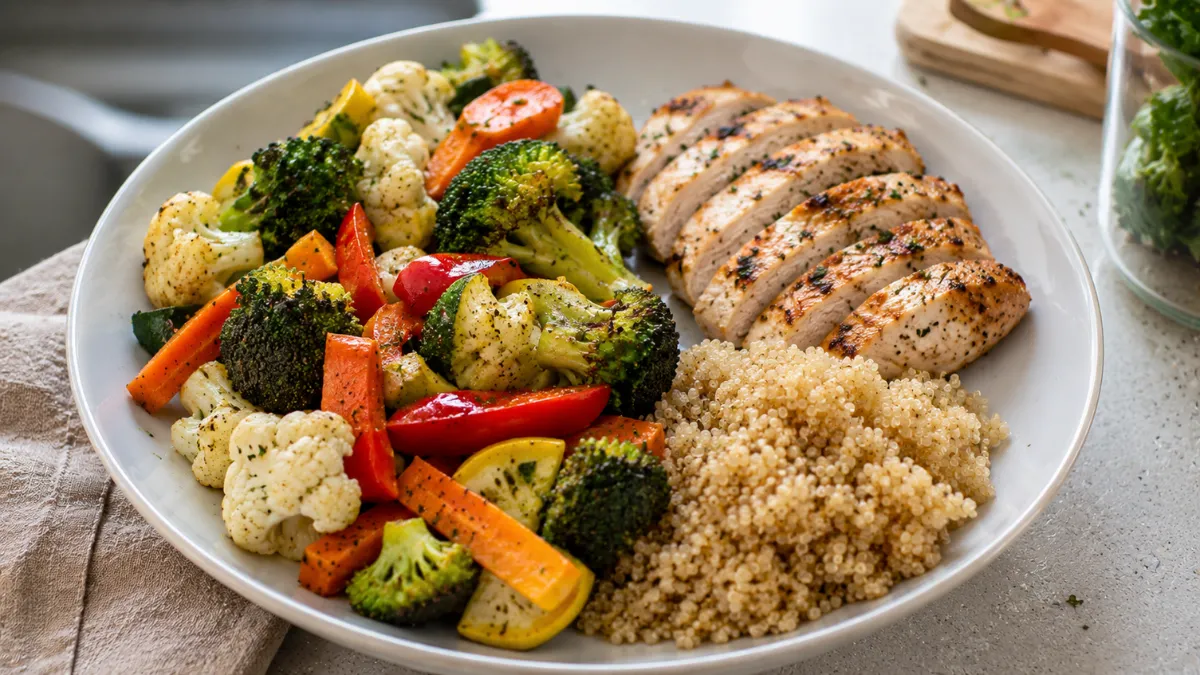
- Lunch: 1 palm grilled chicken, 2 fists mixed salad + broccoli, 1 cupped hand quinoa, 1 thumb olive oil dressing
- Dinner: 1 palm salmon, 2 fists asparagus + cauliflower, 1 cupped hand sweet potato, 1 thumb avocado
This approach naturally creates macronutrient balance: roughly 25–35% protein, 40–50% carbs, 25–35% fats depending on choices, supporting muscle maintenance, steady energy, and satiety.
The Plate Method: Visual Balance at a Glance
The plate method, endorsed by the CDC and American Diabetes Association, uses a standard 9-inch dinner plate for instant structure.
Core division:
- ½ plate: Non-starchy vegetables (broccoli, leafy greens, peppers, zucchini, cauliflower)
- ¼ plate: Lean protein (chicken, turkey, fish, beans, tofu, eggs, lean beef)
- ¼ plate: Quality carbohydrates (brown rice, quinoa, whole-grain bread, starchy vegetables like potato or corn, fruit)
Add a thumb of healthy fat if not included (e.g., dressing or nuts). Use smaller plates to reinforce visual cues; research links larger dishware to increased servings.
Comparison Table: Hand Method vs. Plate Method
| Feature | Hand Method | Plate Method | Best For |
|---|---|---|---|
| Primary Tool | Your hand | 9-inch plate | Flexibility vs. visual structure |
| Protein Portion | 1 palm | ~¼ plate | Muscle support, satiety |
| Vegetables | 1–2 fists | ½ plate | Volume, fiber, micronutrients |
| Carbs | 1 cupped hand | ¼ plate | Energy, blood glucose control |
| Fats | 1 thumb | Added sparingly | Hormone health, flavor |
| Accuracy | ~80–95% for everyday use | Strong for balance | Daily use / diabetes management |
| Portability | Excellent (anywhere) | Good at home/table | Travel / dining out |
| Risks/Limitations | Less precise for very dense foods | Requires appropriate plate size | Over-reliance without hunger cues |
This table highlights complementary use: combine both for optimal results.
Additional Evidence-Based Strategies
Mindful habits enhance visual tools:
- Eat slowly (20+ minutes per meal) to allow satiety hormones to signal
- Pre-portion snacks into cupped handfuls instead of eating from packages
- Start meals with vegetables or water
- Use smaller bowls for calorie-dense items like cereal or pasta
Snacking portions: Limit to 1 palm protein + 1 cupped hand carbs/fruit + 1 thumb fat to prevent unintended surplus.
Dining out: Request half portions, use hand estimates, or box half immediately. Share entrées when appropriate.
Adjusting for goals:
- Weight loss: Emphasize more vegetable fists, slightly smaller carb hands
- Maintenance: Match portions to hunger and activity
- Muscle gain: Increase protein palms and carb hands around training
Risks and contraindications: Very active individuals, athletes, pregnant people, or those with high energy needs require larger portions. Eating disorders or history of restrictive dieting warrant professional guidance rather than self-applied rules. Consult a registered dietitian for personalized medical nutrition therapy.
Long-Term Success and Common Pitfalls
Consistency beats perfection. Track progress via energy levels, clothing fit, or waist measurements rather than daily weighing. Reassess every 4–6 weeks and adjust based on results.
Common pitfalls include ignoring hunger cues, using methods too rigidly, or neglecting food quality. Prioritize minimally processed foods within portions for superior satiety and nutrient density.
Conclusion
Portion control using hands and plates offers a sustainable, low-burden path to better energy balance and health outcomes. These tools align with physiological needs while fitting real lifestyles, supporting gradual weight management, stable blood glucose, and reduced chronic disease risk without scales or obsessive tracking.
Next steps: Choose one method this week—try the plate division for all dinners or hand guides for one meal daily. Build awareness of hunger and fullness alongside visual cues. Over months, these habits compound into lasting metabolic and body composition improvements. Focus on progress through balanced, satisfying meals that nourish rather than restrict.
Practical takeaway: Master your portions with the tools always available—your hands and a standard plate—to regain control in an environment of abundance.
FAQ — People Also Ask
Q: How accurate is the hand portion method compared to weighing food? A: Hand estimates achieve 80–95% accuracy for most foods in real-world settings, sufficient for sustainable results. Database and preparation variability reduce the practical advantage of scales.
Q: Can the plate method help with blood sugar control? A: Yes. Filling half the plate with non-starchy vegetables and limiting carbs to one-quarter supports steadier post-meal glucose, per diabetes management guidelines.
Q: What if I’m very active or trying to build muscle? A: Increase protein palms and carbohydrate cupped hands, especially around activity. Add an extra thumb of fat or vegetable fist as needed to match higher energy demands.
Q: Do smaller plates really reduce calorie intake? A: Visual illusions from smaller dishware can modestly lower servings. Calibrated or consistently smaller plates show more reliable effects in studies.
Q: How do I handle eating out or social meals? A: Use hand estimates, fill half with vegetables first, request modifications, or divide large servings immediately. One mindful choice per meal accumulates effectively.
References
- https://www.cdc.gov/diabetes/healthy-eating/diabetes-meal-planning.html
- https://www.mayoclinic.org/healthy-lifestyle/weight-loss/in-depth/portion-control/art-20546800 https://nutritionsource.hsph.harvard.edu/healthy-eating-plate/
- https://pmc.ncbi.nlm.nih.gov/articles/PMC6088523/
- https://www.precisionnutrition.com/hand-portion-faq
- https://pubmed.ncbi.nlm.nih.gov/34207492/
- https://professional.diabetes.org/sites/dpro/files/2025-05/PE25-Plan-Your-Plate-FINAL-5-22-25.pdf https://www.ncbi.nlm.nih.gov/books/NBK611257/