
📌 Key Takeaways:
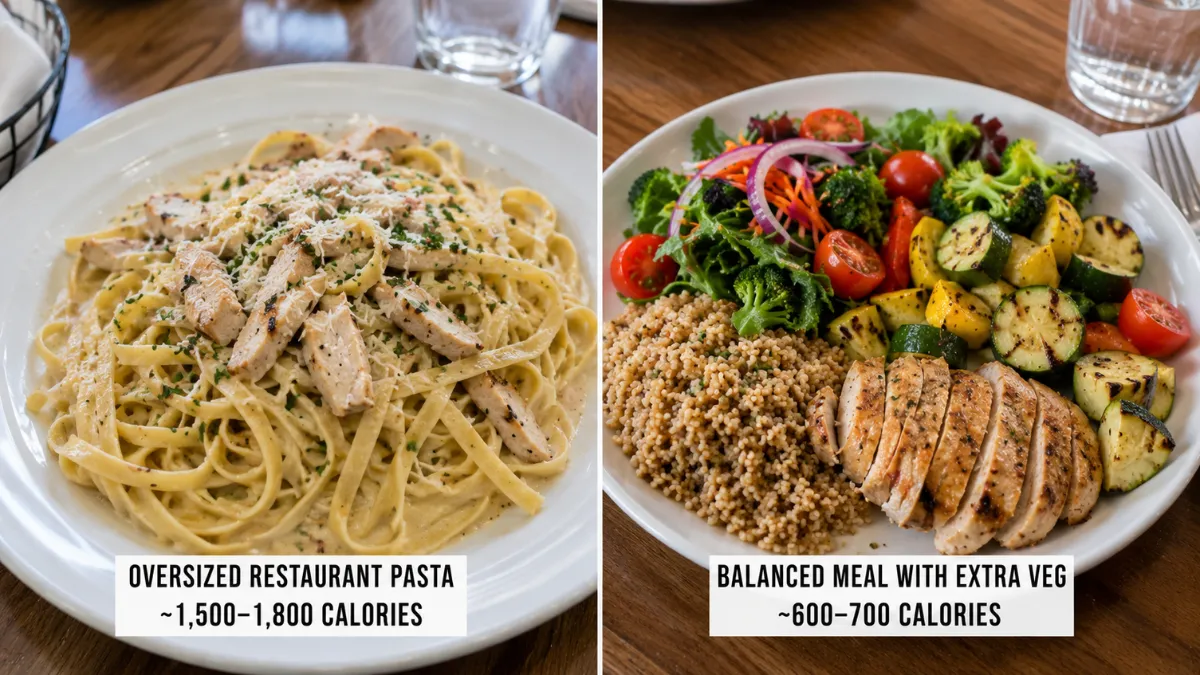
- Restaurant portions often exceed recommended servings by 2–3 times, contributing 200–500 extra kcal per meal; proactive strategies like boxing half immediately limit this reliably.
- Prioritizing non-starchy vegetables (half plate), lean protein (quarter), and quality carbs (quarter) supports satiety, blood glucose stability, and nutrient density.
- Planning ahead, requesting modifications, and using hand guides maintain dietary consistency without elimination or social isolation.
Introduction
Restaurant meals frequently deliver larger portions of energy-dense foods prepared with added fats, sodium, and sugars. This pattern consistently associates with higher daily energy intake and challenges in long-term weight regulation and metabolic health.
In 2026, frequent dining out remains common due to busy schedules and social connections. A single oversized meal can easily add several hundred excess calories, primarily from refined carbohydrates, added fats, and large servings, undermining consistent energy balance and contributing to gradual weight gain or stalled progress.
This article addresses adults who eat out regularly—whether for work, family, or enjoyment—while aiming to preserve health goals. It provides frameworks grounded in clinical guidelines for menu navigation, portion management, and meal composition that integrate with daily patterns. Readers acquire actionable tools to select balanced options, control intake without scales, and sustain nutrient goals, supporting stable weight, steady energy, and reduced chronic disease risk through realistic, sustainable choices.
Why Restaurant Meals Challenge Dietary Goals
Restaurant environments promote overconsumption through large portions, hyper-palatable preparations, and social cues. Evidence indicates people consume more when served larger amounts, independent of hunger in many scenarios. Typical entrées often provide 1,000–1,500+ kcal, far above needs for a single meal.
Added sodium, refined oils, and sugars further affect fluid balance, blood pressure, and post-meal energy. However, complete avoidance proves unnecessary and impractical. Targeted strategies—planning, modifications, and visual portioning—enable alignment with guidelines emphasizing vegetables, lean proteins, whole grains, and limited added fats and sugars.
Individual factors such as activity level, goals (weight loss, maintenance, or muscle support), and medical conditions influence needs. A moderately active adult might target 500–800 kcal per meal with balanced macros: approximately 25–35% protein for satiety, 40–50% carbohydrates from quality sources, and 25–35% fats, primarily unsaturated.
Planning Ahead and Menu Navigation
Effective restaurant dining begins before arrival. Reviewing menus online identifies options rich in vegetables, lean proteins, and whole foods while noting preparation methods. Prioritize grilled, baked, steamed, or roasted items over fried or creamy-sauced dishes.
Key menu red flags and better alternatives:
- Avoid or limit: “Crispy,” “loaded,” “extra cheese,” “alfredo,” or “supreme”
- Choose: “Grilled,” “steamed,” “garden,” “provencal,” or “primavera”
Request modifications confidently: dressings and sauces on the side, vegetables instead of fries, or no added salt/butter. Many establishments accommodate these requests. Start the meal with water or unsweetened tea and a vegetable-based appetizer or side salad to promote earlier satiety.
Bullet list of smart starters:
- Mixed green salad with dressing on side (add grilled protein)
- Broth-based soup or vegetable plate
- Fresh fruit or vegetable sides where available
This approach reduces total intake while increasing fiber and micronutrients.
Mastering Portions When Dining Out
Restaurant servings commonly double or triple standard portions. Immediate action prevents overeating: request a to-go container upon arrival and box half the entrée before beginning. This creates an automatic controlled portion matching home meals.
Apply the hand portion method for quick estimation without tools:
- Protein: 1 palm (~20–30g protein)
- Non-starchy vegetables: 1–2 fists
- Carbohydrates: 1 cupped hand (adjust for activity)
- Fats: 1 thumb
Alternatively, use the plate method on a standard 9-inch plate: half non-starchy vegetables, quarter lean protein, quarter quality carbohydrates, with fats added sparingly.
Practical examples across cuisines:
- Italian: Grilled chicken or fish with extra vegetables, side of pasta (1 cupped hand), olive oil dressing
- Asian: Stir-fried vegetables with tofu or shrimp, brown rice or cauliflower rice (controlled portion), minimal sauce
- Mexican: Fajitas with double vegetables, lean protein, limited tortillas or rice, guacamole in moderation
- American: Grilled protein, large salad, baked potato or sweet potato (moderate), steamed broccoli
Share entrées or appetizers in groups to distribute portions naturally.
Comparison Table: Common Restaurant Choices
| Cuisine / Dish | Higher Calorie Option | Better Balanced Swap | Approx. Calorie Difference | Protein | Key Benefits | Considerations |
|---|---|---|---|---|---|---|
| Burger Meal | Cheeseburger + fries + soda | Grilled chicken sandwich, side salad, water | 400–600 kcal less | Higher | Lower refined carbs, more fiber | Request no mayo, add veggies |
| Pasta Dish | Creamy Alfredo with bread | Grilled protein + marinara + extra veg | 300–500 kcal less | Similar | Better blood sugar response | Sauce on side, whole grain if available |
| Asian Stir-Fry | Fried rice with heavy sauce | Vegetable stir-fry, brown rice, lean protein | 200–400 kcal less | Higher | Higher micronutrients | Ask for light oil, steamed |
| Salad | Loaded with cheese, croutons, dressing | Greens, grilled protein, veggies, light vinaigrette | 300+ kcal less | Higher | Volume eating, satiety | Dressing on side |
| Breakfast | Pancakes with syrup & bacon | Veggie omelet, side fruit, whole grain toast | 200–400 kcal less | Higher | Sustained energy | Limit added fats/sugars |
This table illustrates how small swaps and modifications achieve substantial differences in energy and nutrient density while preserving enjoyment.
Beverage, Dessert, and Social Strategies
Beverages contribute significant hidden calories. Choose water, sparkling water, unsweetened tea, or black coffee. Limit alcohol and sugar-sweetened drinks, which add calories without satiety. One glass of wine or light beer can fit occasionally when accounted for in daily balance.
For desserts, share one portion or opt for fruit-based options. Alternatively, end with herbal tea or coffee to signal meal completion. Eat mindfully: slow pace (20+ minutes), put utensils down between bites, and attend to fullness cues.
Additional evidence-based habits:
- Eat the vegetables and protein first to blunt glucose response and enhance satiety
- Avoid all-you-can-eat formats when possible
- For fast food, select grilled items, salads with lean protein, and controlled sides
Special Considerations and Long-Term Integration
Athletes or those with higher needs may require larger carbohydrate or protein portions around activity. Individuals with diabetes benefit particularly from the plate method for glycemic control. Those with history of disordered eating should prioritize flexibility and professional support over rigid rules.
Consistency across multiple meals matters more than perfection in one. Pair restaurant strategies with home preparation on most days for overall balance. Track subjective markers: energy levels, hunger patterns, and clothing fit.
Risks and contraindications: Very frequent dining out may complicate sodium control or nutrient adequacy if vegetable intake remains low. Those with specific medical conditions (e.g., kidney disease, food allergies) require tailored professional advice. Calorie labeling helps some but can distress others; focus on whole-food choices regardless.
Conclusion
Strategic approaches to restaurant dining enable maintenance of dietary patterns supporting weight management, metabolic health, and enjoyment without deprivation. Using planning, modifications, plate or hand guides, and immediate portioning aligns meals with evidence-based recommendations for vegetables, proteins, and quality carbohydrates.
Implement one or two changes this week—review a favorite restaurant menu in advance or commit to boxing half upon arrival. Over time, these habits compound, preserving progress amid social and practical realities of modern life. Sustainable health integrates nourishing choices in all settings, fostering long-term adherence and positive relationships with food.
Practical next steps: Build a short list of reliable “go-to” orders at frequent spots. Combine with regular home cooking and physical activity for comprehensive benefits. Focus on progress through balanced, satisfying meals that fit real life.
FAQ — People Also Ask
Q: How can I control portions without looking awkward? A: Request a to-go box right when food arrives and portion half immediately. Use hand estimates discreetly or apply the plate method visually.
Q: Are calorie labels on menus helpful? A: They provide awareness and support modest reductions in intake for some. Combine with food quality focus for best results; they may not suit everyone.
Q: What’s the best way to handle sauces and sides? A: Always request on the side. Use sparingly or substitute with herbs, lemon, vinegar, or mustard for flavor with fewer calories.
Q: Can I still eat out while trying to lose weight? A: Yes. Emphasize vegetables, lean proteins, controlled carbs, and immediate half-portion boxing. Aim for 500–700 kcal balanced meals most times.
Q: How do I navigate fast food or takeout? A: Choose grilled proteins, large salads or vegetable sides, and limit fried items and sugary drinks. Build a short list of reliable lower-energy options.
References
- https://www.heart.org/en/healthy-living/healthy-eating/eat-smart/nutrition-basics/dining-out-doesnt-mean-ditch-your-diet https://www.cdc.gov/healthy-weight-growth/media/pdfs/portion-size_pitfalls-508.pdf
- https://www.mayoclinic.org/healthy-lifestyle/weight-loss/in-depth/portion-control/art-20546800 https://www.rupahealth.com/post/healthy-eating-when-dining-out
- https://nutritionsource.hsph.harvard.edu/healthy-eating-plate/
- https://pmc.ncbi.nlm.nih.gov/articles/PMC4025680/
- https://www.dietaryguidelines.gov/sites/default/files/2021-03/Dietary_Guidelines_for_Americans-2020-2025.pdf