
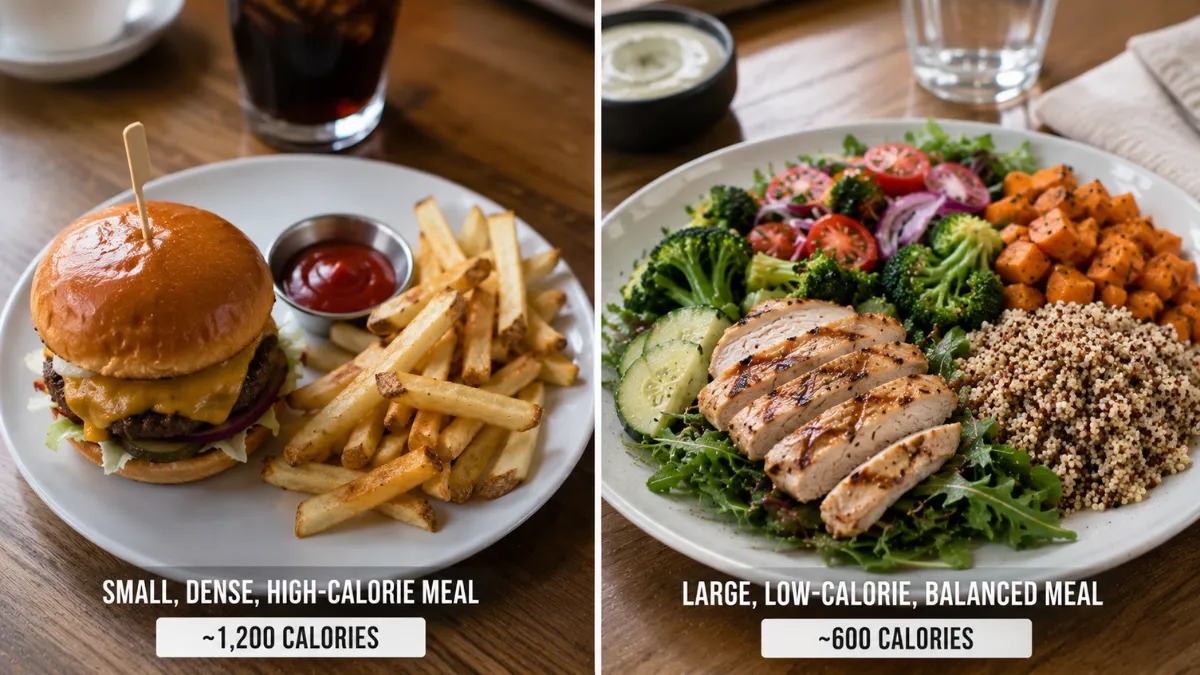
📌 Key Takeaways:
- Low-energy-density foods (high water and fiber) allow larger portions with 200–500 fewer daily calories while enhancing fullness through stomach distension and slower digestion.
- Increasing protein to 25–30% of energy intake and soluble fiber supports greater satiety, reduced ad libitum intake, and better preservation of lean mass during deficits.
- Combining the plate method with mindful habits creates sustainable 300–500 kcal daily reductions suitable for 0.5 kg weekly weight loss without deprivation.
Introduction
Creating a calorie deficit remains fundamental for weight loss and improved metabolic health, yet many experience persistent hunger that undermines adherence. Restaurant and packaged food portions, combined with energy-dense ultra-processed items, contribute to passive overconsumption, making intentional reduction challenging.
In 2026, with rising awareness of sustainable approaches, evidence highlights that strategic food selection—prioritizing volume over restriction—enables meaningful calorie reduction while supporting satiety hormones, stable blood glucose, and nutrient adequacy. High-water, high-fiber foods and adequate protein leverage physiological mechanisms including gastric distension, delayed gastric emptying, and gut hormone signaling (GLP-1, PYY) to prolong fullness.
This article serves adults seeking practical, long-term solutions for weight management, energy stability, or chronic disease risk reduction without constant hunger or rigid tracking. Readers gain frameworks for meal composition, portioning, and habits aligned with guidelines from major health authorities, delivering realistic calorie control that fits daily life while preserving enjoyment and health. These methods typically support gradual, maintainable progress of 0.5–1 kg per week when consistently applied alongside activity.
The Science of Satiety: Why Volume and Composition Matter
Satiety depends on meal volume, energy density, macronutrient balance, and eating pace rather than calories alone. Low-energy-density foods provide greater weight and volume with fewer calories, activating stretch receptors in the stomach and slowing nutrient absorption.
Meta-analyses confirm higher-protein diets (25–30% energy) increase satiety, reduce subsequent intake by hundreds of calories daily, and support fat loss while sparing lean mass. Soluble fiber further enhances this by forming a gel in the gut, delaying emptying, and promoting fullness hormones.
Individual needs vary by age, sex, activity, and starting point. A moderate deficit of 300–500 kcal daily proves sustainable for most, avoiding metabolic slowdown or rebound hunger associated with severe restriction. Focus on whole-food patterns ensures micronutrient density alongside calorie control.
Core mechanisms supporting reduced intake without hunger:
- Increased gastric volume from water-rich foods
- Slower digestion from protein and fiber
- Improved blood glucose stability reducing cravings
- Enhanced diet-induced thermogenesis from protein
High-Volume, Low-Energy-Density Eating
Prioritize foods high in water and fiber to maximize volume per calorie. Non-starchy vegetables often provide 20–50 kcal per generous serving while delivering bulk, micronutrients, and fiber.
Practical implementation:
- Start meals with a large vegetable salad or broth-based soup
- Bulk entrees with zucchini, cauliflower, peppers, spinach, broccoli, or mushrooms
- Choose fresh fruits over dried or juices for natural water content
- Opt for air-popped popcorn or berries as snacks
This approach reliably increases meal size while decreasing energy intake. For example, replacing higher-density sides with extra vegetables can cut 200–300 kcal per meal without reducing perceived portion size.
Meal examples:
- Breakfast: Large vegetable omelet (spinach, peppers, mushrooms) with 1–2 eggs or egg whites plus berries
- Lunch: Massive mixed salad with lean protein, beans, and light vinaigrette
- Dinner: Stir-fried vegetables loaded with broccoli, cauliflower rice, and grilled protein
Optimizing Protein and Fiber for Fullness
Protein ranks highest for satiety among macronutrients. Aim for 1.6–2.2 g per kg body weight or roughly 25–30% of calories, distributed across meals. Sources include lean meats, poultry, fish, eggs, Greek yogurt, cottage cheese, tofu, tempeh, and legumes.
Soluble fiber (oats, beans, apples, flax, chia, psyllium) complements protein by slowing digestion. Target 25–38 g total fiber daily, emphasizing whole sources.
Daily targets and distribution:
- Protein: 20–40 g per main meal (1–2 palms)
- Fiber: 8–10+ g per meal from vegetables, fruits, whole grains, legumes
Bullet list of high-satiety food combinations:
- Greek yogurt (protein) with berries and chia seeds (fiber)
- Grilled chicken or tofu with large portions of roasted non-starchy vegetables and quinoa
- Lentil or bean-based soups loaded with vegetables
- Cottage cheese with cucumber, tomatoes, and a sprinkle of nuts
These pairings create balanced macronutrient profiles (approximately 25–35% protein, 40–50% carbs from fiber-rich sources, 20–30% fats) that sustain energy and minimize hunger between meals.
The Plate Method and Additional Behavioral Strategies
The plate method provides visual structure without weighing: fill half the plate with non-starchy vegetables, one-quarter with lean protein, and one-quarter with quality carbohydrates (whole grains, starchy vegetables, or fruit). Add healthy fats sparingly.
Supporting habits:
- Eat slowly (20+ minutes per meal) to allow satiety signals
- Drink water before and during meals (hydration supports fullness)
- Include protein and fiber at snacks to prevent energy crashes
- Prioritize sleep and stress management, as both influence hunger hormones
Comparison Table: High vs. Low Satiety Meal Approaches
| Feature | Low Satiety Example (Higher Density) | High Satiety Example (Volume-Focused) | Calorie Difference (approx.) | Satiety Benefit | Best For |
|---|---|---|---|---|---|
| Breakfast | Bagel with cream cheese | Veggie omelet + berries + Greek yogurt | 300–400 kcal less | Prolonged fullness, stable glucose | Morning energy |
| Lunch | Pasta with creamy sauce | Large salad + grilled chicken + beans | 400–500 kcal less | Higher fiber, volume | Midday satiety |
| Dinner | Cheeseburger + fries | Grilled fish + double vegetables + sweet potato | 300–500 kcal less | Better macronutrient balance | Weight management |
| Snack | Chips or candy | Apple + handful almonds or cottage cheese | 150–250 kcal less | Sustained energy | Craving control |
| Overall Daily Impact | Higher passive intake | Natural deficit with satisfaction | 500–800 kcal reduction | Improved adherence | Sustainable deficit |
This table demonstrates how strategic swaps maintain or increase food volume while supporting calorie goals.
Long-Term Integration, Risks, and Adjustments
Consistency across days yields results. Reassess every 4–6 weeks using energy levels, hunger patterns, weight trends, and measurements. Adjust portions upward for high activity or muscle-building goals by increasing protein and carbohydrate servings around training.
Risks and contraindications: Rapid or severe restriction can increase hunger and nutrient gaps. Athletes, pregnant individuals, adolescents, or those with high energy needs require higher intakes. History of disordered eating necessitates professional guidance. Very high protein may not suit those with certain kidney conditions—consult a registered dietitian for personalized targets. Always emphasize whole foods over supplements for satiety and health.
Common pitfalls include neglecting fats entirely (which support hormone health) or relying solely on low-calorie processed items lacking nutrients. Prioritize variety for micronutrients and long-term adherence.
Conclusion
Reducing calories without persistent hunger relies on leveraging volume, protein, fiber, and behavioral cues rather than willpower alone. Low-energy-density eating combined with balanced macronutrients and the plate method creates satisfying meals that naturally support a moderate deficit, promoting fat loss, muscle preservation, steady energy, and metabolic improvements.
Next steps: Implement the plate method for one week while increasing vegetable volume and protein at each meal. Track subjective hunger and energy rather than obsessive weighing. Pair with regular physical activity and adequate sleep for synergistic benefits. Over months, these evidence-aligned habits foster sustainable body composition changes and a healthier relationship with food.
Practical takeaway: Focus on eating larger amounts of nutrient-dense, high-volume foods to feel satisfied on fewer calories, building habits that endure beyond short-term diets for lifelong health.
FAQ — People Also Ask
Q: How much protein should I eat daily to reduce hunger? A: Target 1.6–2.2 g per kg body weight or 25–30% of calories, spread across meals. This consistently enhances satiety and supports weight management.
Q: Does drinking water before meals help with calorie reduction? A: Yes. Pre-meal water increases fullness and can modestly lower intake, particularly when combined with high-volume foods.
Q: Can I use volume eating long-term without nutrient deficiencies? A: Yes, when emphasizing whole foods like vegetables, fruits, lean proteins, and whole grains. Variety ensures micronutrient needs are met.
Q: What if I still feel hungry after increasing vegetables and protein? A: Check eating pace, hydration, sleep, and stress. Slightly increase healthy fats or fiber-rich carbs, or consult a professional to rule out underlying factors.
Q: Is the plate method effective for blood sugar control? A: Yes. Half non-starchy vegetables and balanced protein/fiber blunt glucose spikes and promote steadier energy and satiety.
References
- https://www.mayoclinic.org/healthy-lifestyle/weight-loss/in-depth/weight-loss/art-20044318
- https://pmc.ncbi.nlm.nih.gov/articles/PMC8017325/
- https://www.healthline.com/nutrition/8-tips-to-reduce-portions
- https://medicine.illinois.edu/news/weight-loss-success-depends-on-eating-more-protein-fiber-while-limiting-calories-study-finds
- https://nutritionsource.hsph.harvard.edu/healthy-weight/
- https://www.cdc.gov/healthy-weight-growth/media/pdfs/portion-size_pitfalls-508.pdf
- https://pmc.ncbi.nlm.nih.gov/articles/PMC7539343/